Epic Research is not viewable using Internet Explorer. Please try accessing it with an alternate browser.
Cosmos Study

Asthma Has a Greater Impact on Outcomes in Younger COVID-19 Patients

Abstract: Asthma increases risk of adverse outcomes among younger COVID-19 patients, but has no impact among patients over the age of 65.
September 21, 2020
Doug Winesett, MD | Kieran Gallagher, MPH

From the beginning of the pandemic, there have been concerns that subsets of the population would be at increased risk of experiencing severe disease with COVID-19. For example, multiple studies, as well as CDC data, have shown age to be an important risk factor of severe disease in COVID-19 patients.1,2 Another population of concern is people with asthma, which is a common condition with an estimated prevalence in the US of 7.9%.3 This concern seems logical since people with asthma have an increased risk of more severe outcomes from other viral respiratory infections, such as those associated with the common cold.4 The effect of asthma on outcomes in COVID-19 patients, however, remains unclear. Studies have shown conflicting results.5 Our data show asthma has a greater impact on outcomes in younger COVID-19 patients.
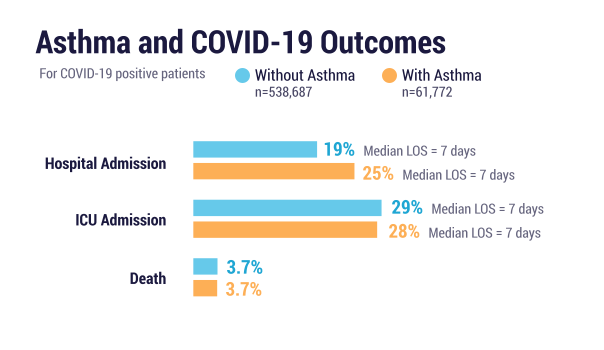
Figure 1
Asthma and COVID-19 outcomes for COVID-19 positive patients
Figure 1. This table shows the rate of hospitalization, ICU admission, and mortality for asthmatic and non-asthmatic COVID-19 patients. The median hospital and ICU length of stay are shown for each. The median hospital LOS is restricted to patients who were admitted. The rate of ICU admission is restricted to admitted patients, and the median ICU LOS is restricted to patients with an ICU stay. Mortality rate only includes deaths that were recorded in the EHR. Patients were included regardless of follow-up time. Median LOS measures were the same regardless of whether currently admitted patients were included.

We first evaluated the rate of hospitalization, ICU admission, and death in patients with asthma without age stratification. The data show a higher percentage of COVID-19 patients with asthma were admitted to the hospital than non-asthmatic patients (25% vs. 19%). The percentage of admitted patients requiring treatment in the ICU was similar for asthma patients and non-asthmatic patients (28% vs. 29%). When admitted, the median hospital length of stay (LOS) was the same for both asthmatic patients and non-asthmatic patients. When they required ICU admission, the median ICU LOS was also the same in both groups. The percentage of patients who died was similar in both groups (see Figure 1).

When the outcomes of asthma patients were compared to the outcomes of non-asthmatic patients in the same age group, asthma appeared to be a more important risk factor for poor outcome in younger patients (Figure 2). For example, in the 19-34 years old age group, COVID-19 patients with asthma were two times more likely to be admitted to the hospital, two times more likely to be admitted to the ICU, and three times more likely to die than non-asthmatic COVID-19 patients in the same age group. In contrast, in the 75-84 years old age group, patients with asthma were 7% more likely to be admitted, 4% more likely to be admitted to the ICU, and 10% less likely to die than non-asthmatic patients. This trend was statistically significant for all three outcomes (p<0.05).
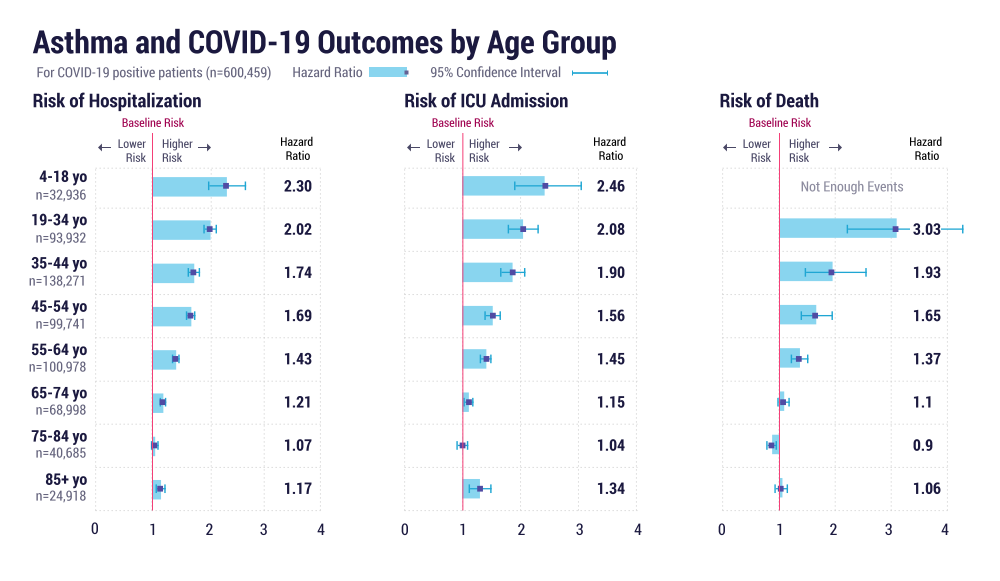
Figure 2
Asthma and COVID-19 outcomes by age group
Figure 2: The light blue bars show the risk of hospitalization, ICU admission, and death for an asthmatic patient with COVID-19 when compared to a non-asthmatic patient in the same age group. The dark blue lines indicate the 95% confidence intervals, or the range that contains the true value with 95% certainty. The risk was calculated using a hazard ratio, a statistical method used to assess the probability of an event in one group (asthmatic patients with COVID-19) compared to a control group (non-asthmatic patients with COVID-19 in the same age group). A hazard ratio of 1 means an asthmatic patient has the same risk of the event as a non-asthmatic patient. A hazard ratio of 2 means an asthmatic patient is twice as likely to experience the event, while a hazard ratio of 0.5 means an asthmatic patient is half as likely to experience the event.

In summary, asthma appears to have a more significant impact on outcomes in younger COVID-19 patients. We suggest that the additional risk associated with asthma is overshadowed in older patients by their already elevated risk.

This summary includes data as of September 3, 2020. Data are pooled from 65 healthcare organizations representing 616 hospitals and 11,606 clinics that span 27 states.

References:

  1. Williamson EJ, Walker AJ, Bhaskaran K, et al. Factors associated with COVID-19-related death using OpenSAFELY. Nature. 2020;584(7821):430-436. doi:10.1038/s41586-020-2521-4
  2. COVID-19 Hospitalization and Death by Age | CDC. Accessed September 6, 2020.https://www.cdc.gov/coronavirus/2019-ncov/covid-data/investigations-discovery/hospitalization-death-by-age.html
  3. NHIS Early Release – 2018. Accessed September 5, 2020. https://www.cdc.gov/nchs/nhis/releases/released201905.htm#14
  4. Corne JM, Marshall C, Smith S, et al. Frequency, severity, and duration of rhinovirus infections in asthmatic and non-asthmatic individuals: A longitudinal cohort study. Lancet. 2002;359(9309):831-834. doi:10.1016/S0140-6736(02)07953-9
  5. Hartmann-Boyce J, Gunnell J, Drake J, et al. Asthma and COVID-19: review of evidence on risks and management considerations. BMJ evidence-based Med. Published online September 3, 2020. doi:10.1136/bmjebm-2020-111506
  6. Brownstein NC, Cai J. Tests of trend between disease outcomes and ordinal covariates discretized from underlying continuous variables: Simulation studies and applications to NHANES 2007-2008. BMC Med Res Methodol. 2019;19(1):2. doi:10.1186/s12874-018-0630-7
