Epic Research is not viewable using Internet Explorer. Please try accessing it with an alternate browser.
Cosmos Study

Babies with Neonatal Abstinence Syndrome: Most Cases Not from Mother’s Prescription

June 7, 2022
Dual-Team Study
Team A:Dave R. Little, MD, MSSam Sahakian
Team B:Howard Bregman MDJoey Haddock

Key Findings:

  • 0.9% of babies have neonatal abstinence syndrome (NAS). Of those, over 86% were born to mothers with no opioid prescription, suggesting that prescribed opioids are not the most common cause of NAS.
  • Of the opioids prescribed to pregnant mothers whose babies had NAS, 76% were for buprenorphine, which is used to treat opioid use disorder.

Neonatal abstinence syndrome (NAS) can be diagnosed in babies born with exposure to a variety of addictive substances, including opioids, amphetamines, and benzodiazepines. Because of the ongoing and worsening opioid epidemic1 and the established risk of NAS in babies born to parents taking prescribed opioids2, we studied more than 1.3 million births that occurred between January 1, 2018, and January 1, 2022, to examine the role of prescription opioids in babies born with NAS. For those births, we identified babies born with NAS and how many of those babies’ mothers were prescribed an opioid within 90 days before the birth.

Our data show that 86.1% of babies with NAS were born to pregnant mothers without such a prescription (Figure 1), suggesting that most NAS cases aren’t tied to opioid prescriptions. Therefore, clinicians should review patient drug use history to be aware of possible NAS in patients without an opioid prescription.
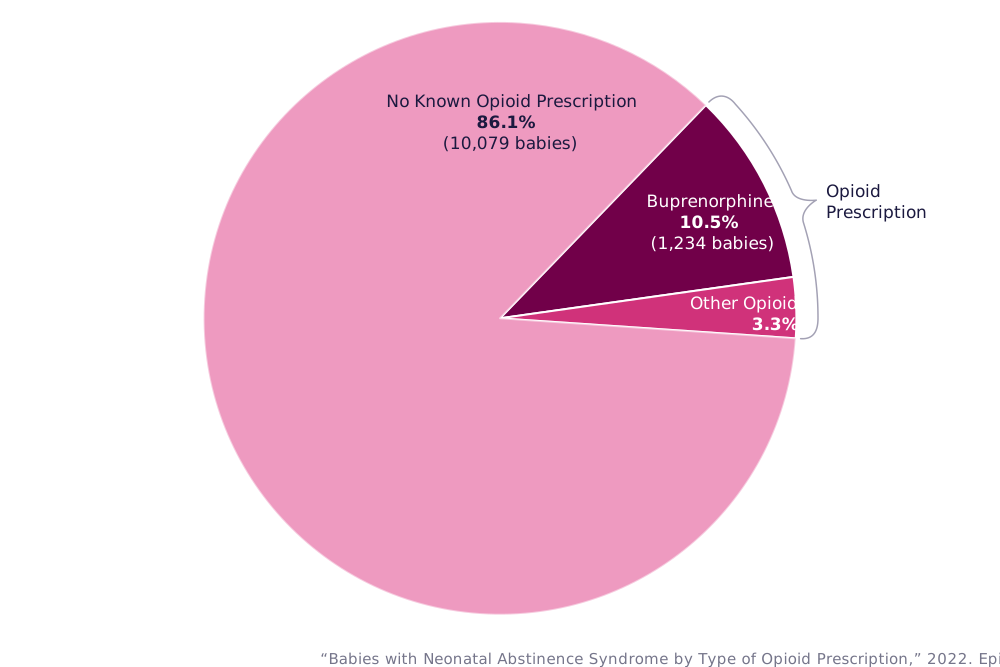
Figure 1
Babies with Neonatal Abstinence Syndrome by Type of Opioid Prescription
Figure 1: Babies with NAS by whether an opioid was prescribed to the mother, and if so, what type of opioid was prescribed.

1.5% of pregnant mothers had an opioid prescription. Of those mothers who had an opioid prescription and whose babies had NAS, 76% of their opioid prescriptions were for buprenorphine, accounting for 10.5% of all babies who had NAS. Buprenorphine is often used to treat opioid use disorder. Clinicians should consider whether the potential risk of NAS from buprenorphine outweighs the risks of abstinence related to opioid use disorder during pregnancy.3,4

Original Publication Date: June 7, 2022
Last Updated: June 8, 202
2

The title of this brief was updated to reflect a more accurate description of how babies experience neonatal withdrawal syndrome. See this article for more information.


These data come from Cosmos, a HIPAA-defined Limited Data Set of more than 140 million patients from 165 Epic organizations including 950 hospitals and over 20,000 clinics, serving patients in all 50 states. This study was completed by two teams that worked independently, each comprised of a clinician and research scientists. The two teams came to similar conclusions.  

References

  1. American Medical Association. Issue brief: Nation’s drug-related overdose and death epidemic continues to worsen. Updated February 15, 2022. Accessed March 11, 2022. https://www.ama-assn.org/system/files/issue-brief-increases-in-opioid-related-overdose.pdf
  2. Centers for Disease Control and Prevention. Prescription Opioid Pain Reliever Use During Pregnancy. Updated July 10, 2020. Accessed March 11, 2022. https://www.cdc.gov/reproductivehealth/maternalinfanthealth/substance-abuse/prescription-opioid-use-during-pregnancy/index.htm
  3. Kraft WK. Buprenorphine in Neonatal Abstinence Syndrome. Clin Pharmacol Ther. 2018;103(1):112-119. doi:10.1002/cpt.930 
  4. Jansson LM, Velez, ML, McConnell K, Spencer N, et al. Maternal buprenorphine treatment and infant outcome. Drug Alcohol Dependence. 2017. doi: 10.1016/j.drugalcdep.2017.08.001