Epic Research is not viewable using Internet Explorer. Please try accessing it with an alternate browser.
Cosmos Study

Babies with Withdrawal Symptoms 68 Percent More Likely to Have Developmental Disorders Than Those Without

November 29, 2022
Dual-Team Study
Team A:Dave Little, MDAlex PiffEric Barkley
Team B:Anna Miller, RNBrendan Joyce

Key Findings

  • Children diagnosed with neonatal abstinence syndrome (NAS) as infants are 68% more likely to be diagnosed with a motor developmental disorder and 27% more likely to be diagnosed with a speech developmental disorder than those without NAS.   
  • NAS-diagnosed infants are 26% more likely to develop autism by age 5 than those without NAS and 80% more likely to develop autism by age 9 than the general population. 

Recommended Actions

  • Children diagnosed with NAS as newborns need frequent and timely screenings for autism, speech, and motor developmental disorders to facilitate early intervention and therapy to minimize developmental impacts. 
  • Women who are pregnant or planning to become pregnant who are using substances known to cause NAS should work with their providers on treatment options that are best for both mom and baby. 

Neonatal abstinence syndrome (NAS) is diagnosed in infants with withdrawal symptoms after fetal exposure to addictive substances.1 Opioids and amphetamines are the most common drugs that cause NAS, but other substances, such as alcohol, benzodiazepines, or some antidepressants, can also be the cause.2 Previously, it has not been well-established whether a diagnosis of NAS at birth affects the likelihood of the child developing autism or developmental disorder in childhood.3 We matched 12,303 infants born in 2017 or 2018 who were diagnosed with NAS to 24,606 infants who were born in the same year, shared the same social determinants of health, and had the same number of visits to their healthcare provider, but were not diagnosed with NAS, using a 1:2 ratio. We compared these groups to identify how NAS might affect a child’s likelihood of developing autism or speech or motor developmental disorders as the child approaches 5 years of age. 

Of children born in 2017 and 2018, the NAS-diagnosed infants were 27% more likely to have developed speech developmental disorders, 68% more likely to have developed motor developmental disorders, and 26% more likely to have developed autism (Figure 1).  
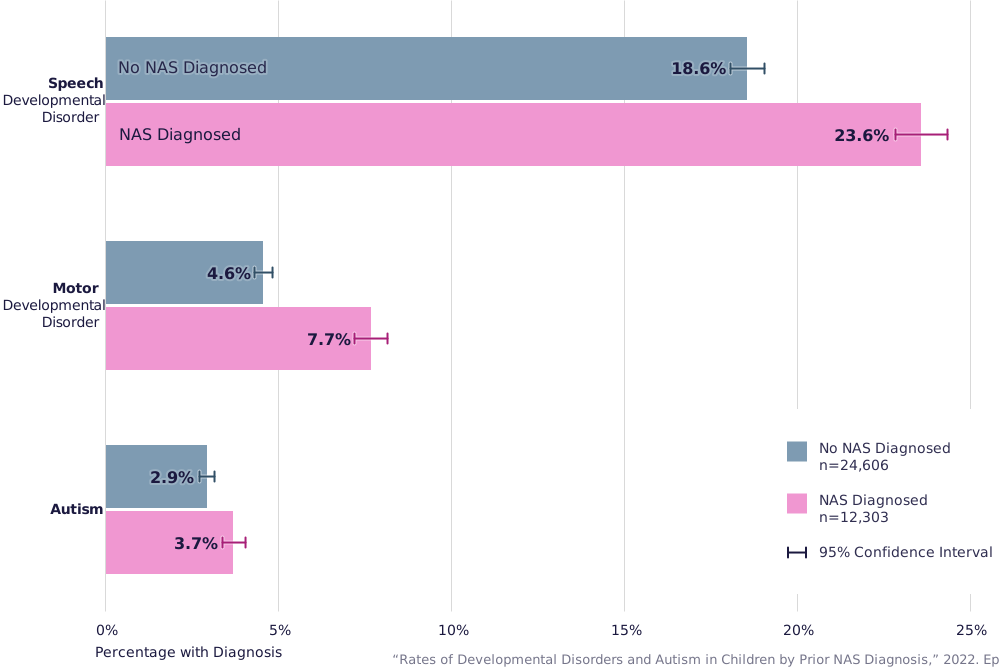
Figure 1
Rates of Developmental Disorders and Autism in Children by Prior NAS Diagnosis
Figure 1. Rates of autism, speech developmental disorders, and motor developmental disorders in children ages 4-5 with and without NAS.  

Diagnosing autism can be difficult in young children, and many are not diagnosed until they are older than five years of age.4 To determine whether infants born with NAS continued to develop autism at greater rates than the general population as they get older, we separately evaluated the prevalence of autism in the general population from birth until age nine and compared it to the prevalence of autism in those in the same age range who were diagnosed with NAS. While the prevalence of autism increased as both populations got older, those diagnosed with NAS continued to see an 80% increase compared to the general population. 
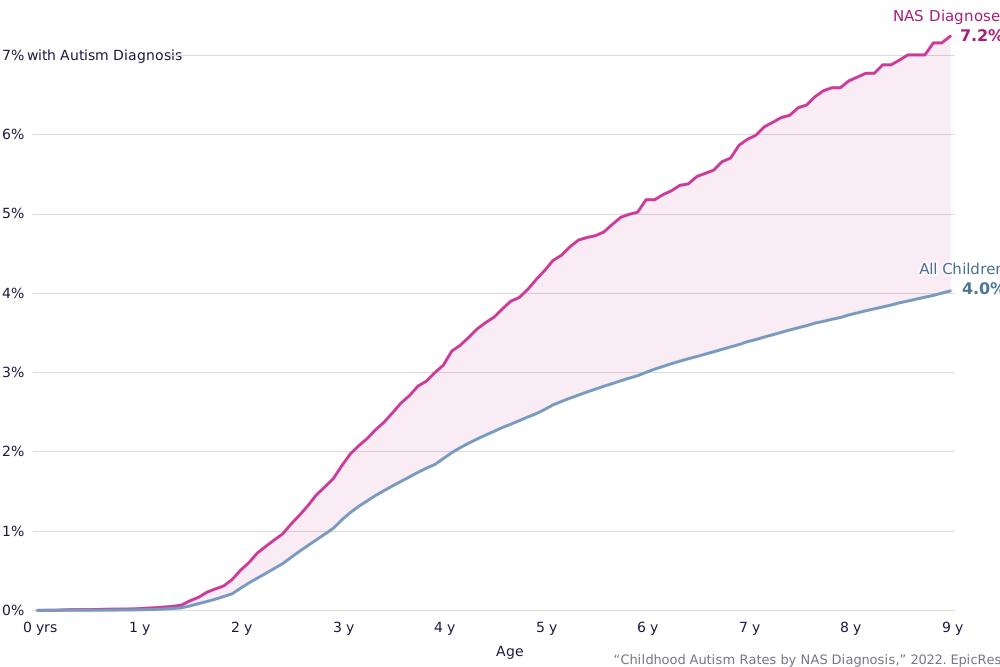
Figure 2
Childhood Autism Rates by NAS Diagnosis
Figure 2. Percentage of infants diagnosed with autism in total population compared to NAS-diagnosed population by age from birth to nine years. 

These results reinforce the importance of educating patients and their families on prenatal exposures to substances that can lead to NAS. Pregnant patients should discuss potential treatment options with their provider, as discontinuing use of these substances too quickly during pregnancy can also be harmful to their unborn child.2 

Additionally, these results highlight the need for frequent and timely screenings for autism, speech developmental disorders, and motor developmental disorders for infants diagnosed with NAS at birth. Staying on schedule with well-child checks for infants diagnosed with NAS can facilitate early intervention and therapy to minimize developmental impacts and improve outcomes for these children.4 

*Our observed rates of the three disorders for non-NAS diagnosed children in our study population are higher than those published in previous studies.5 This is likely due to our matching algorithm that required a certain number of healthcare encounters and other socioeconomic characteristics to minimize other differences between the NAS and non-NAS study groups.


These data come from Cosmos, a HIPAA-defined Limited Data Set of more than 163 million patients from 173 Epic organizations including more than 1,000 hospitals and more than 21,000 clinics, serving patients in all 50 states and Lebanon. This study was completed by two teams that worked independently, each composed of a clinician and research scientists. The two teams came to similar conclusions. Download the PDF version of this brief on EpicResearch.org for more information on the data definitions used for this study. 

References

  1. Coyle MG, Brogly SB, Ahmed MS, Patrick SW, Jones HE. Neonatal abstinence syndrome. Nat Rev Dis Primers. 2018;4(1):47. Published 2018 Nov 22. Doi:10.1038/s41572-018-0045-0 
  2. Cleveland Clinic. Neonatal Abstinence Syndrome. https://my.clevelandclinic.org/health/diseases/23226-neonatal-abstinence-syndrome.  Accessed September 9, 2022. 
  3. Centers for Disease Control and Prevention. Prenatal Opioid and Substance Exposure. https://www.cdc.gov/ncbddd/aboutus/pregnancy/nas.html. Accessed November 4, 2022. 
  4. Centers for Disease Control and Prevention. Autism Spectrum Disorder (ASD). https://www.cdc.gov/ncbddd/autism/screening.html. Accessed August 3, 2022. 
  5. Law J, Boyle J, Harris F, Harkness A, Nye C. Prevalence and natural history of primary speech and language delay: findings from a systematic review of the literature. Int J Lang Commun Disord. 2000;35(2):165-188. doi:10.1080/136828200247133