


In July 2019, President Trump signed an executive order to improve kidney health by incentivizing preventative care, education strategies, payment models, and interventions.1 Additionally, in September 2021, a joint task force made up of members from the National Kidney Foundation and American Society of Nephrology (CKD-EPI) announced a race-free calculation of eGFR. Previously, calculations for eGFR often included a variable for race that resulted in higher eGFR values for Black patients. Higher eGFR values typically indicate that the kidneys are functioning well. Consequently, fewer Black patients were diagnosed with chronic kidney disease (CKD) or diagnosed with less severe cases of CKD as staging of CKD is largely dependent on eGFR values.2 Some organizations, however, implemented race-free eGFR calculations much earlier than 2021, some as early as 2017.3
To better understand whether changes in eGFR calculations might be correlated with changes in CKD diagnosis, we studied 472,634 patients diagnosed with initial CKD of at least stage 2 from January 1, 2018, to December 31, 2022, to determine the average eGFR at initial diagnosis of CKD and whether that has changed over time.
Using serum creatinine values, we calculated the race-free eGFR at time of initial diagnosis for each patient and determined the average eGFR at initial diagnosis for all patients by race or ethnicity per month. We found that the average eGFR at initial CKD diagnosis has risen from an average of 53.7 mL/min in January 2018 to 55.9 mL/min in December 2022. This increase suggests that patients are likely being diagnosed earlier than in previous years. Increases in average eGFR at diagnosis are seen across all races and ethnicities.
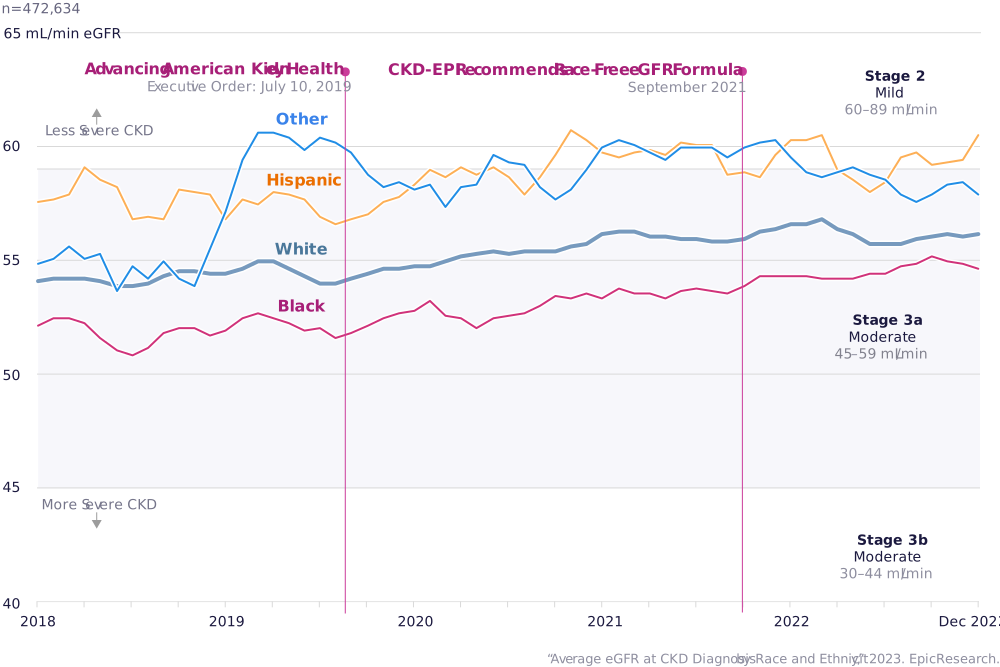
These findings suggest that initiatives from the executive order as well as the adoption of the race-free eGFR might be correlated with earlier diagnosis of CKD, helping to reduce the previous disparities seen between Black patients and other racial and ethnic groups in CKD diagnosis.
