Our data show an increased risk of hospitalization with oxygen support for pregnant women with COVID-19. While there is no evidence of increased risk during the first trimester of pregnancy, pregnant women in their second and third trimesters face an elevated risk of hospitalization requiring oxygen support and, often, an elevated risk of ventilation or ICU care.
Ellington et al1 found that, in women of reproductive age who tested positive for COVID-19, pregnancy was associated with an increased risk of ICU admission and need for mechanical ventilation but was not associated with an increased risk of mortality. Their analysis did not include trimester or delivery information.
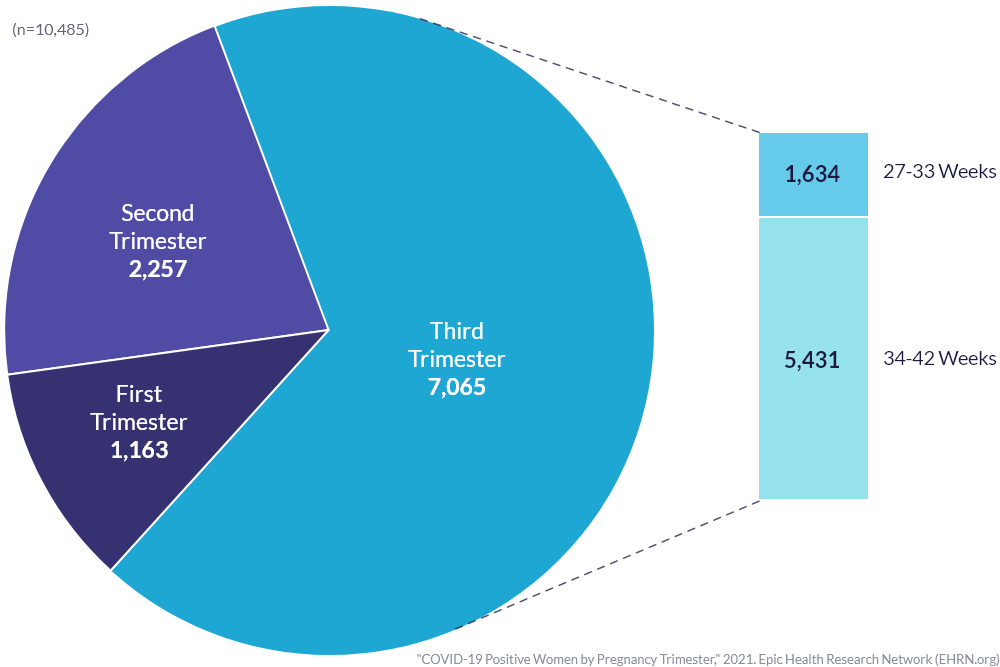
This study looks at pregnant women diagnosed with COVID-19 and their likelihood of needing oxygen support and ventilation or ICU admission during different trimesters. Pregnancy trimester data, shown in Figure 1, reveals that more pregnant women were diagnosed with COVID-19 during the later stages of pregnancy. We speculate this is because many health systems have begun universal testing for COVID-19 in pregnant women, especially during the later stages of pregnancy and when patients are admitted to labor and delivery. 2,3
Our data show 39.1% of pregnant women with COVID-19 were admitted to the hospital within six weeks of COVID-19 positivity, compared to an admission rate of 5.1% in non-pregnant women of reproductive age. Our standard definition for a COVID-19 related admission identifies patients admitted for active COVID-19 disease and those admitted for other reasons where COVID-19 is documented for incidental reasons (e.g. recent diagnosis or positive test during admission). With many potential pregnancy-related reasons for admission, we used oxygen support during the admission as a proxy for active COVID-19 disease. These rates were 5.5% and 3.0% for pregnant and non-pregnant women, respectively. The number of deaths did not reach a level that would allow meaningful comparison (6 deaths in pregnant women), so we analyzed the ICU admission rate or need for mechanical ventilation as a measure of disease severity.
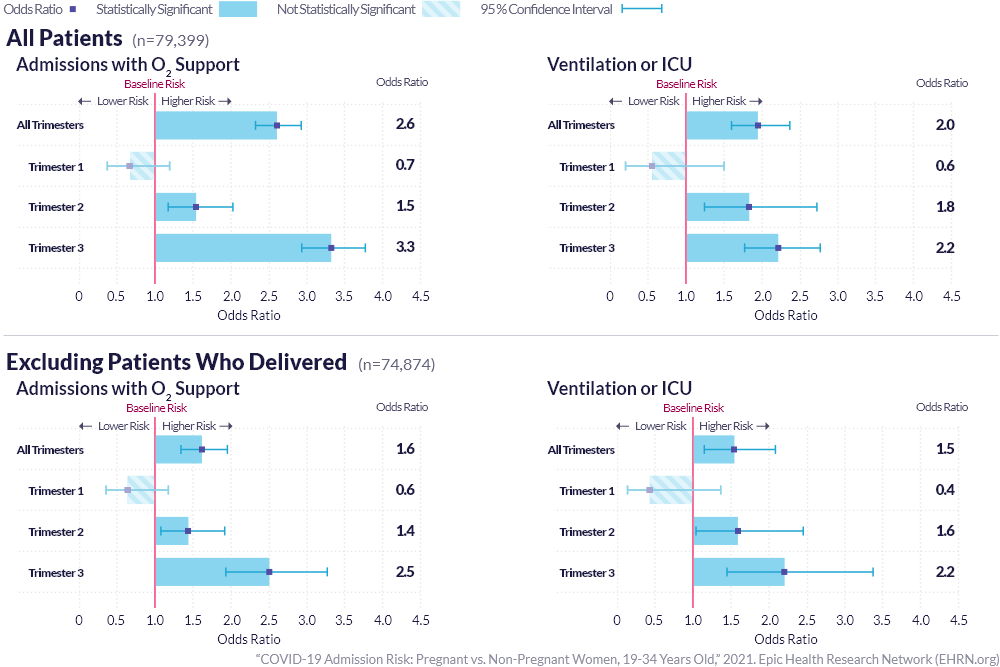
Pregnant women between the ages of 19 and 34 who are in their second or third trimesters have an elevated risk of hospitalization requiring oxygen, as well as ventilation and ICU admission, as shown in Figure 2. This elevated risk is not seen during the first trimester. This remains true even when women who delivered* while COVID-19 positive are removed from the dataset.
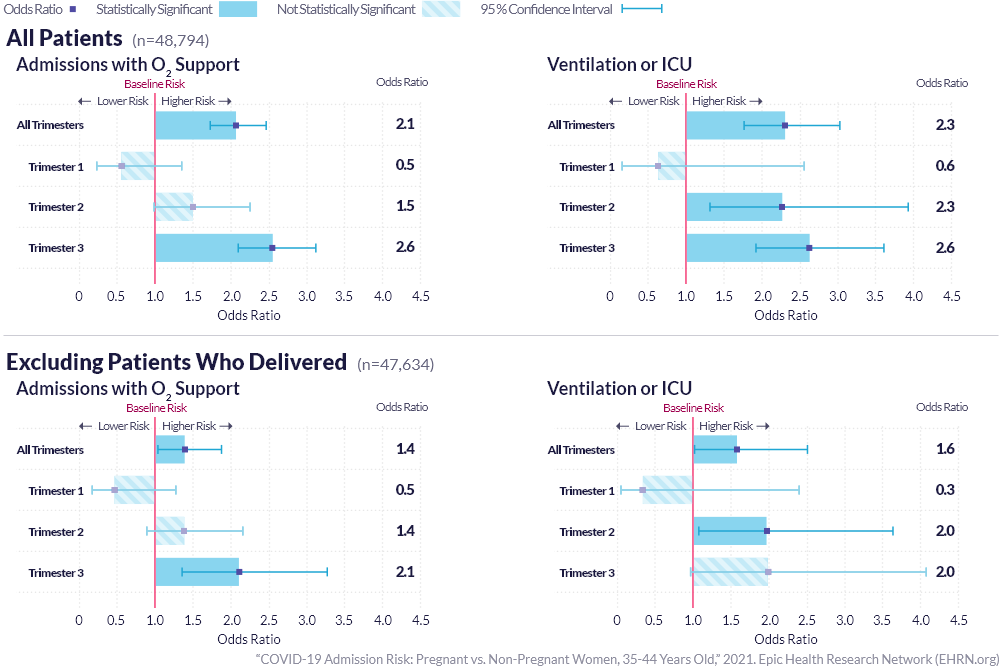
We see similar results in older pregnant women (ages 35 to 44), with no statistically significant differences for pregnant women in their first trimester, both for hospitalizations requiring oxygen and for ventilation or ICU care, as shown in Figure 3. There is a large decrease in the risk of ventilation or ICU care in the third trimester when women who deliver are removed from the population. This may be due in part to a smaller sample size or it may suggest some of the need for ventilation or ICU care is pregnancy related rather than COVID-19 related. Further study is needed to identify the specific aspects of pregnancy that influence the course of illness of COVID-19, as well how COVID-19 may affect pregnancy.
*Deliveries include deliveries, miscarriages, and fetal demise.


