Epic Research is not viewable using Internet Explorer. Please try accessing it with an alternate browser.
Cosmos Study

COVID-Vaccinated Mothers Less Likely to Have Premature Birth Than Unvaccinated Mothers

Abstract: Preterm birth and low birth weight are less prevalent among babies born to mothers who received the SARS-CoV-2 vaccine.
August 11, 2021
Dual-Team Study
Team A:Denise Rasmussen, BSN, RNJoe Deckert, PhDLily Rubin-Miller, MPH
Team B:Anna R Miller, MSN, RNJustin Lo, PhD, MT(ASCP)Lindsay Lin, PhD

In a previous EHRN study, we found mothers that tested positive for COVID-19 experienced greater rates of preterm birth and low birth weight than mothers that tested negative for COVID-19. Other early studies of COVID-19 vaccination in pregnancy point to the vaccine’s safety.1 With the increase in availability of the COVID-19 vaccine, we analyzed a large population of COVID-vaccinated mothers’ risk of preterm birth or low birth weight compared to babies born to unvaccinated mothers. Nearly all women who were vaccinated in their first trimester have not yet given birth; therefore, this study looked only at second and third trimester vaccination outcomes.

The data showed that 82 of 2,399 (3.4%) babies born to vaccinated mothers were preterm, while 10,154 of 104,838 (9.7%) babies born to unvaccinated mothers were preterm. 64 of 2,399 (2.7%) babies born to vaccinated mothers had a low birth weight, and 7,839 of 104,838 (7.5%) of babies born to unvaccinated mothers had a low birth weight. CDC-reported baselines for preterm birth and low birth weight are 10% and 8.3%, respectively2,3.
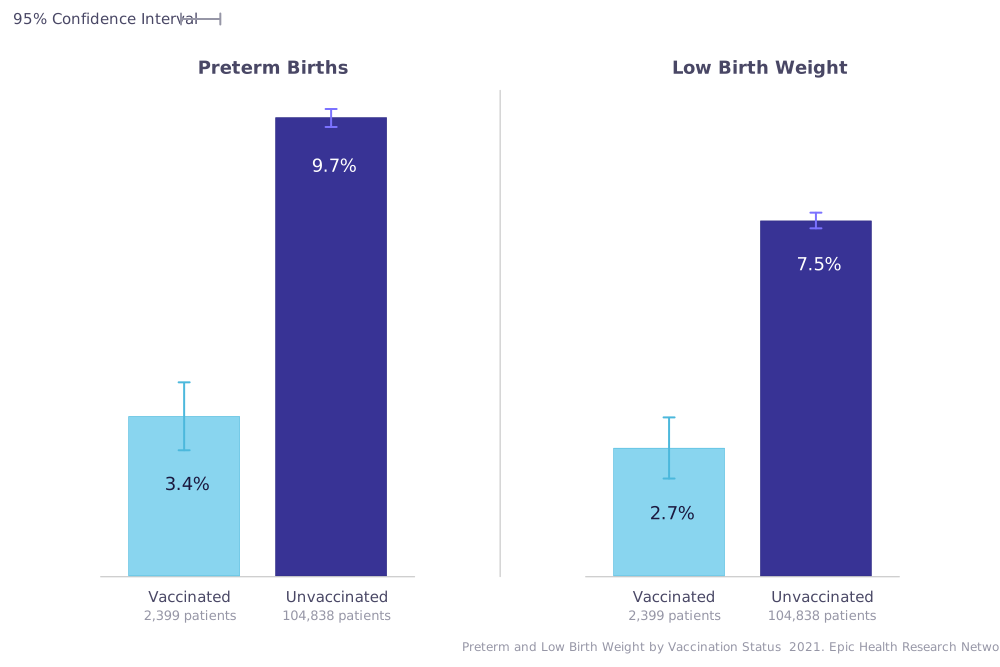
Figure 1
Preterm and Low Birth Weight by Vaccination Status
Figure 1. The proportion of babies born preterm or with low birth weight by vaccination status.

While we did see lower incidence of low birth weight and preterm births in babies born to vaccinated patients, vaccination status may indicate greater access to prenatal care or higher engagement with healthcare overall. Other factors associated with getting a COVID vaccine, such as education level and underlying health conditions, might also influence our results.4


These data come from Cosmos, a HIPAA Limited Data Set of more than 114 million patients contributed by Epic customers. This study was completed by two teams, each comprised of a clinician and two research scientists, who worked independently analyzing the data. The two teams came to similar conclusions. Data are pooled from 125 healthcare organizations representing 641 hospitals that span 50 states.

References

  1. Shimabukuro TT, Kim SY, Myers TR, et al. Preliminary Findings of mRNA Covid-19 Vaccine Safety in Pregnant Persons. New England Journal of Medicine. 2021;384(24):2273-2282. doi:10.1056/NEJMoa2104983
  2. Centers for Disease Control and Prevention. Preterm Birth. Published October 30, 2020. Accessed July 17, 2021. https://www.cdc.gov/reproductivehealth/maternalinfanthealth/pretermbirth.htm
  3. Centers for Disease Control and Prevention. Birthweight and Gestation. Published July 17, 2020. Accessed February 19, 2021. https://www.cdc.gov/nchs/fastats/birthweight.htm
  4. Theiler RN, Wick M, Mehta R, Weaver A, Virk A, Swift M. Pregnancy and birth outcomes after SARS-CoV-2 vaccination in pregnancy. medRxiv. 2021; 05. doi:10.1101/2021.05.17.21257337