The CDC has raised concerns about increased isolation, fear, and anxiety during the pandemic.1 This brief examines how COVID-19 changed care delivery patterns for patients with anxiety or depression, in both established and newly diagnosed patients. Additionally, our analysis shows the initial steep drop-off in total visits has returned to pre-pandemic levels, with telehealth compensating for the reduction in office visits.
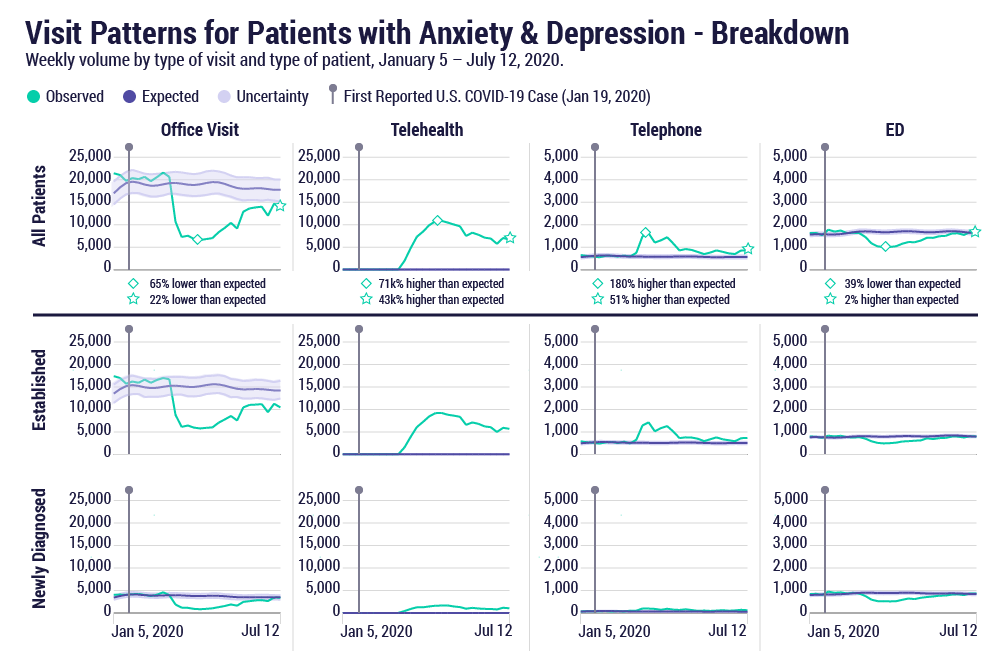
A total of 2,394,000 visits with a diagnosis of anxiety or depression were identified in the time span from January 7, 2018, to July 12, 2020. We used weekly visit volume data from before January 19, 2020, to create estimates for what visit volumes would have looked like without the COVID-19 pandemic.2
Soon after the COVID-19 outbreak, in-person office and ED visit volumes dropped below expected levels by as much as 65% and 42%, respectively. However, by the week of July 12, ED visits recovered to normal levels, while in-person office visits remained 22% lower than expected. The large initial reduction in office visit volume was partially filled by telehealth visits, which increased from a median of 13 weekly visits to a high of 10,849 visits the week of April 26. At peak volume, telehealth visits represented 54% of all anxiety and depression visits. By the week of July 12, the total volume of visits returned to pre-pandemic volumes, with telehealth visits reduced but still representing 29% of all visits. The total loss of in-person office visits (139,644) after January 19 nearly matches the total number of telehealth visits gained (140,832) during the same timeframe (see Figures 1 and 2D).
Next, we analyzed visit volume trends for patients with a previously established diagnosis of anxiety or depression versus those patients who were newly diagnosed. Established patients saw a greater drop in the proportion of in-person office visits (95% to 35%) as compared to newly diagnosed patients (82% to 28%). Established patients also saw a greater increase in the proportion of telehealth visits (0.2% to 56%) as compared with newly diagnosed patients (0% to 49%) (see Figure 2).
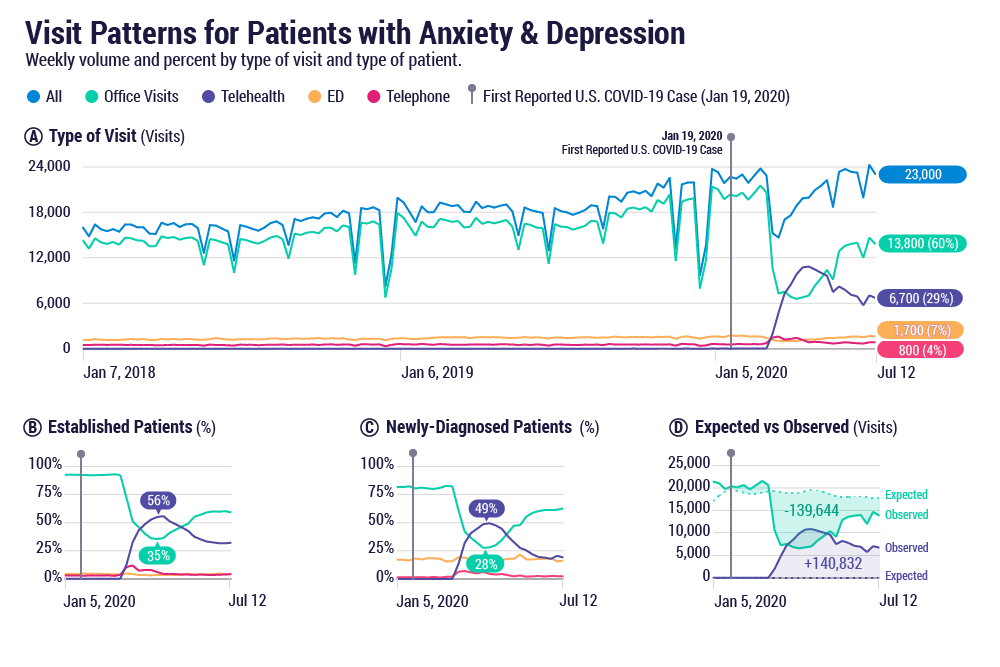
Our analysis shows a greater proportion of care delivery for established patients was provided using telehealth, while newly diagnosed patients had a greater proportion of in-person visits (both office and ED visits). The larger proportion of newly diagnosed in-person office visits may reflect a provider’s desire to initiate new patient relationships in person. We plan to reexamine visit patterns for established and newly diagnosed patients every few months to determine what effect a prolonged pandemic has on visit volumes for anxiety and depression.
This summary includes behavioral health encounters as of July 18, 2020. Due to state privacy regulations for these encounters, our data may not accurately reflect national, regional, or state trends. Data are pooled from 26 healthcare organizations spanning 17 states and covering 15 million patients.


