


In the early months of the pandemic, many hospitals stopped performing elective surgical procedures at the recommendation of the American College of Surgeons and the U.S. Surgeon General.1 We investigated whether common elective surgeries have returned to expected levels.
For this study, we defined “elective” as surgical procedures that can be scheduled based on surgeon and patient convenience and are rarely (less than 2% of the time) performed as part of an emergency admission to a hospital. Using these criteria, we identified the following common surgical categories as elective: breast surgery, abdominal hysterectomy, prostate surgery, vaginal hysterectomy, knee prosthesis, and thyroid or parathyroid surgery.
Our analysis shows that the volume of elective surgeries dropped steeply at the beginning of the pandemic and then increased dramatically when states began reopening and hospitals started offering elective services again for all categories.
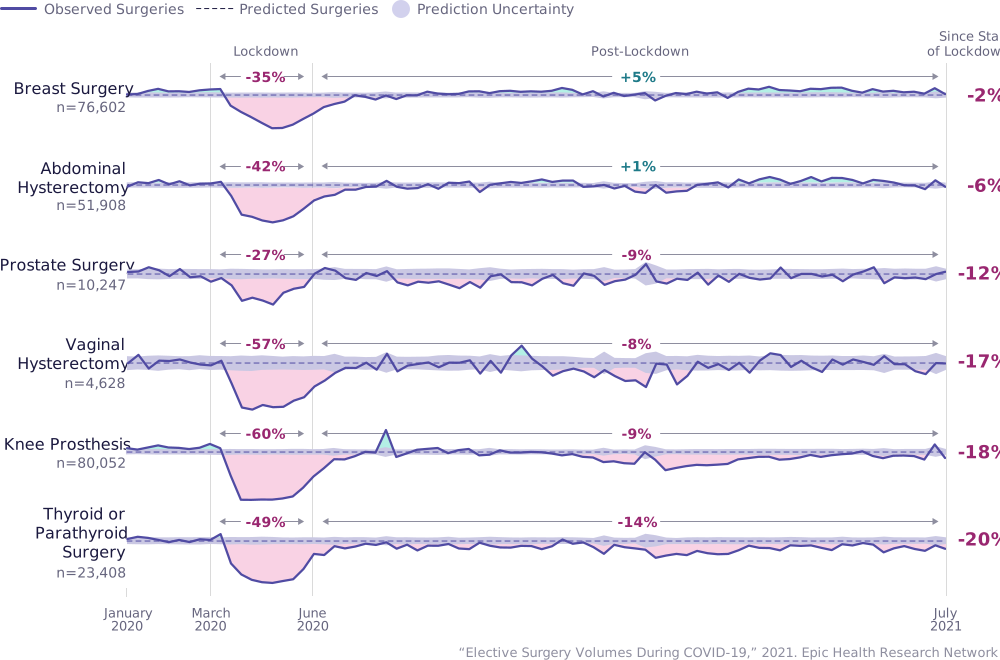
While all categories of elective surgeries we studied were within 14% of predicted levels after lockdown lifted in June 2020, none appear to have fully made up the deficit of missed surgeries from early in the pandemic. Knee prosthesis and thyroid or parathyroid surgeries showed the lowest volumes compared to expected in the post-lockdown period, in addition to some of the largest drops in volume during the lockdown period.
