


Throughout the pandemic, some people have been reluctant to go to the hospital or ED due to concerns about contracting COVID. 1 We wanted to investigate the frequency with which patients developed COVID-19 while hospitalized. As a proxy for this, we looked at patients who tested negative on the day of or day after admission and then tested positive six or more days later.2 We chose this timeframe to try to exclude patients who might have been positive on admission but tested negative at that time due to a lower viral load.
Throughout this brief, we refer to cases that meet these inclusion criteria as cases of “hospital-developed COVID.” We excluded positive COVID-19 tests or COVID-19 diagnoses within 90 days prior to admission. Our data show that rates of acquiring COVID-19 during a hospital stay are low, with only about 1.8% of patients, equating to 172 patients at the highest peak in December 2020.
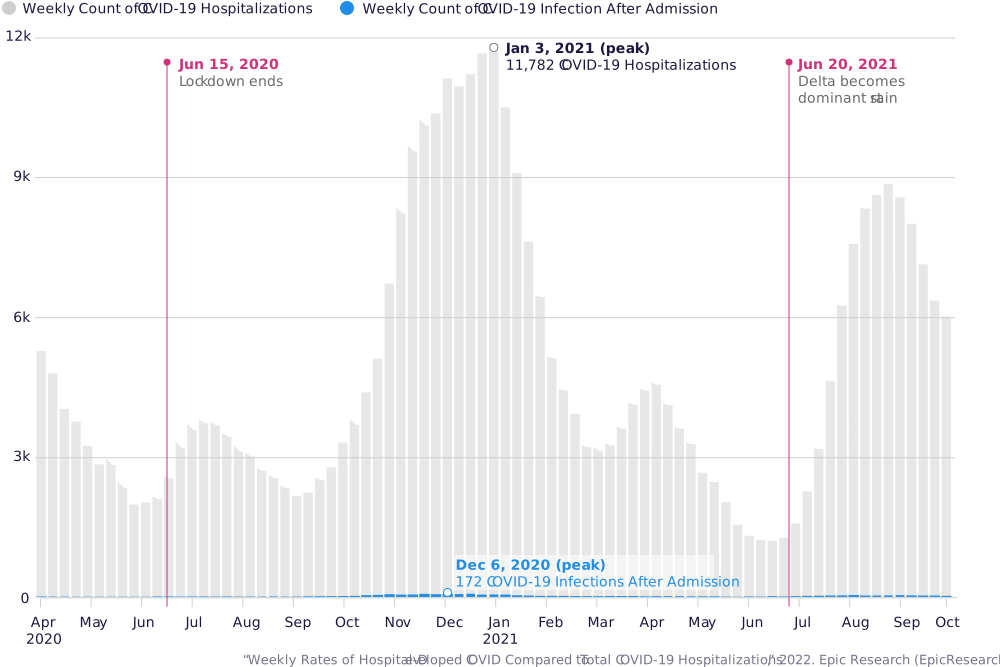
When we looked at the data over time, we found that these cases of COVID-19 rose and fell in similar patterns to the number of patients admitted due to COVID-19 infection. However, in the last half of 2021, the rate of patients who tested negative and then positive after admission rose only about half as much as overall COVID-19 admissions. We speculate that increased vaccination rates among hospital staff, patients, and visitors have contributed to a further limiting of the spread of COVID-19.
Our proxy for hospital developed COVID-19 might be an overcount because the test at admission might have been a false negative. It might also be an undercount because some patients might have been discharged before they tested positive for COVID-19 that they contracted during their hospitalization.
