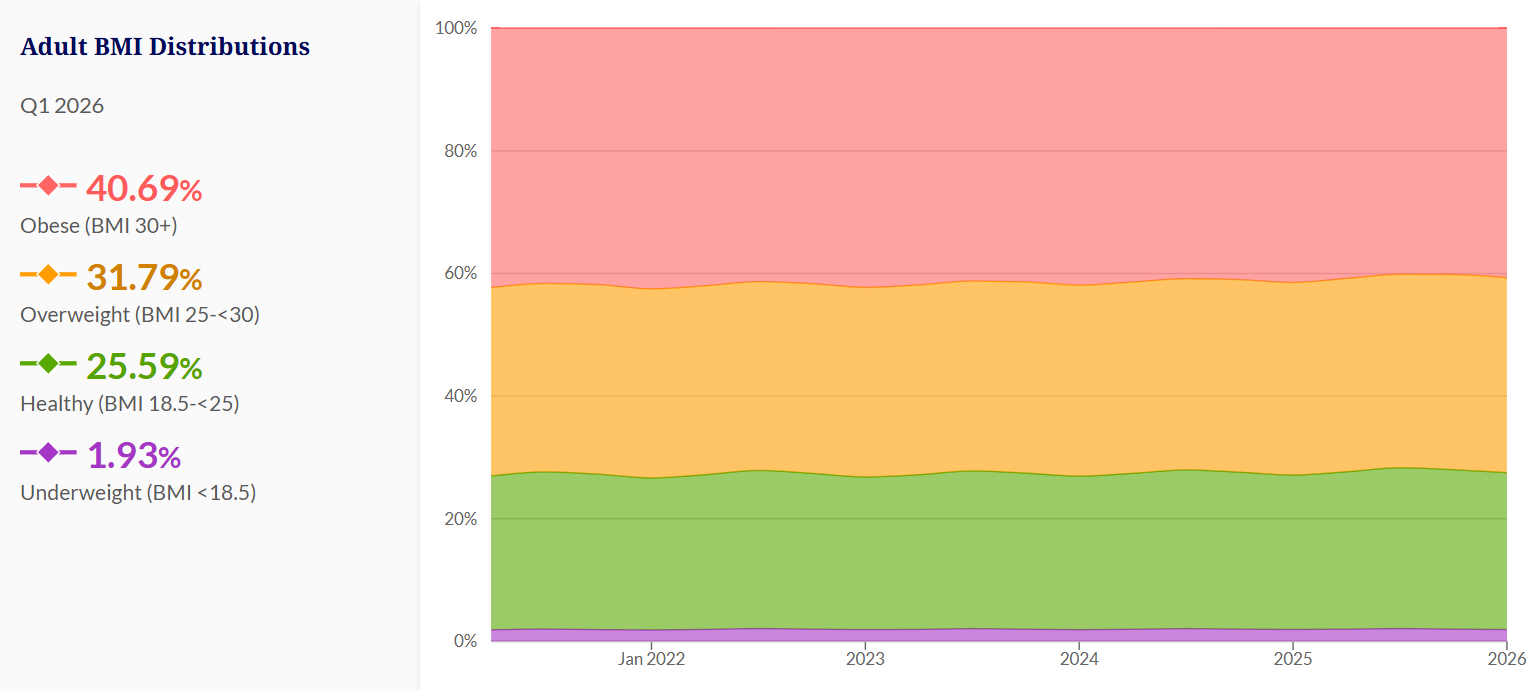
Obesity affects more than 40% of U.S. adults and contributes to cardiovascular disease, type 2 diabetes, certain cancers, and a range of other chronic conditions.1 The arrival of glucagon-like peptide-1 (GLP-1) receptor agonists, a class of medications originally developed for type 2 diabetes, has reshaped the treatment landscape. Semaglutide (Wegovy, Ozempic) received FDA approval for chronic weight management in 2021, followed by tirzepatide (Zepbound) in 2023, both demonstrating substantial weight loss in clinical trials.2,3 Demand has grown rapidly, raising questions about real-world uptake, prescribing patterns across clinical indications, and whether population-level BMI distributions are beginning to shift in response.
The GLP-1 utilization tracker reports prescriptions per 100,000 patients for each GLP-1, and the BMI tracker reports the distribution of U.S. adults across BMI categories.
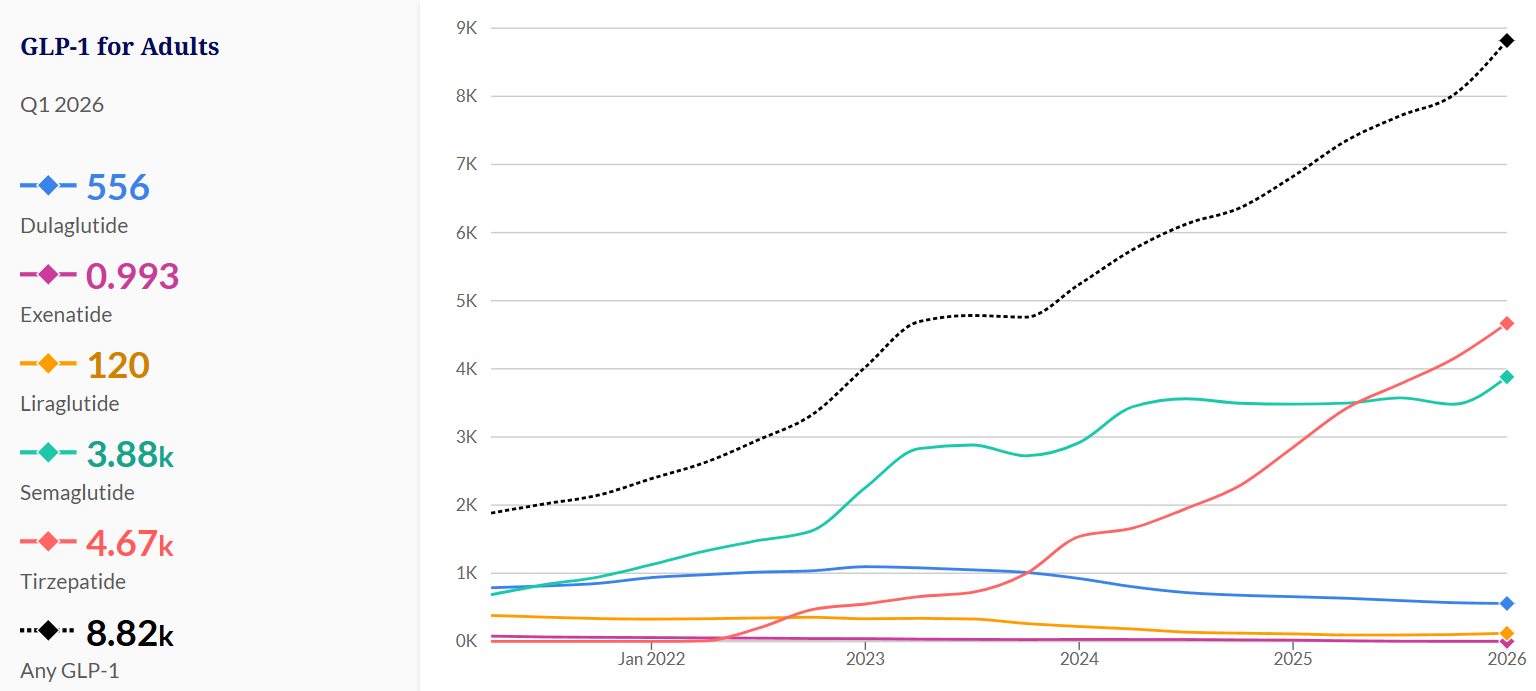
GLP-1 prescribing has grown substantially across the tracker’s window, with prescriptions per 100,000 U.S. adults rising from 1,884 in the second quarter of 2021 to 8,819 in the first quarter of 2026. The composition of GLP-1 prescribing changed markedly over the period. In 2021, the most prescribed agents were semaglutide (about 680 per 100,000) and dulaglutide (about 790 per 100,000). By the first quarter of 2026, tirzepatide had become the most frequently prescribed agent at roughly 4,700 prescriptions per 100,000 patients, and semaglutide had grown to around 3,900 per 100,000. Use of older agents declined as the newer drugs displaced them.
BMI distribution has shifted modestly toward lower weight categories over the same period, with the change concentrated in the second half of the period. The share of U.S. adults classified as obese was 42.3% in the second quarter of 2021 and remained near that level through 2022 before declining to 40.7% by the first quarter of 2026. Over the same window, the healthy weight share rose from 25.1% to 25.6%.