


Admissions Related to Eating Disorders
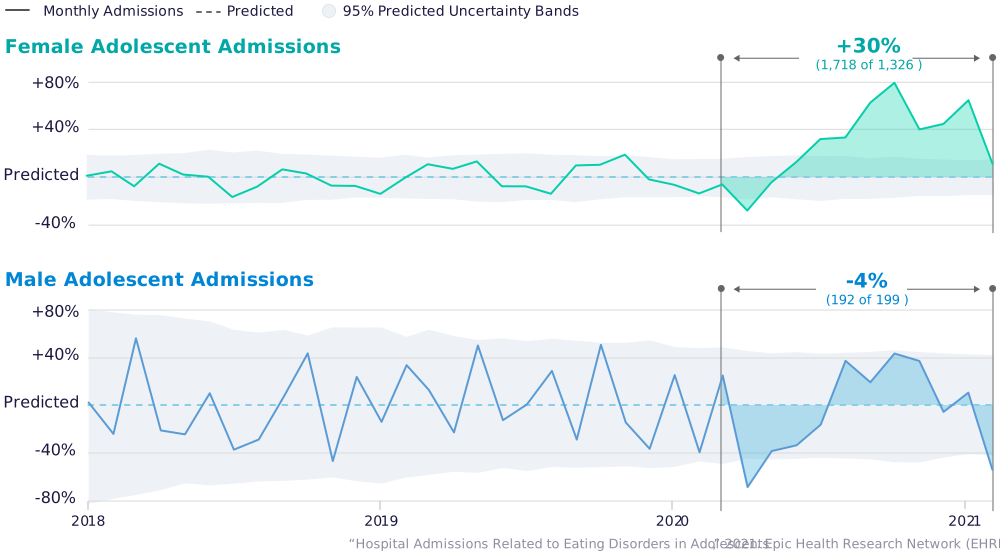
Hospitals have expressed concern that they are seeing an increase in hospitalization of adolescents with eating disorders during the pandemic.1 To evaluate these concerns, we analyzed the rates of hospital admissions that included an eating disorder diagnosis and found that those increased by 25% overall for patients ages 12-18 as compared to predictions based on pre-pandemic trends. When looking at males versus females, females had a 30% increase in hospital admissions (1,326 admissions were predicted and 1,718 occurred). Admissions for males did not increase (199 admissions were predicted and 192 occurred).
New Eating Disorder Diagnoses in Adolescents
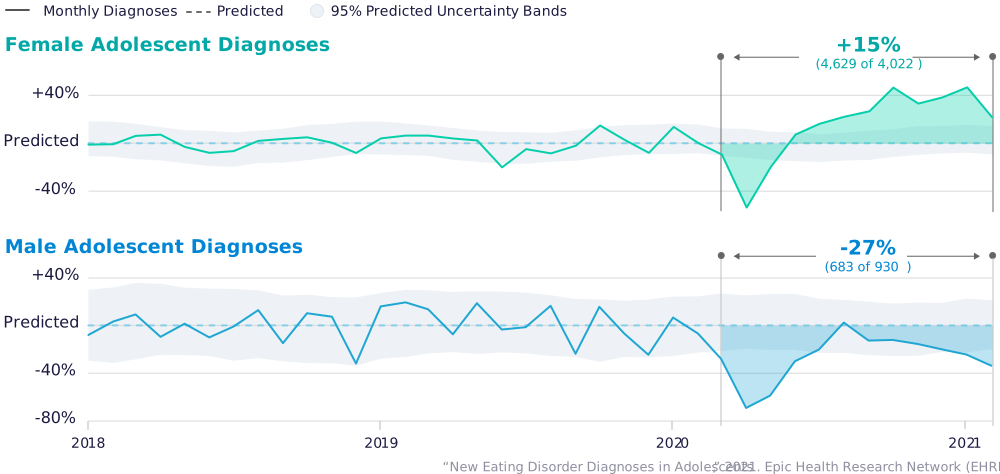
We then examined whether the increase in hospital admissions was partly due to an overall increase in new diagnoses of eating disorders. We found that the total number of visits for a newly diagnosed eating disorder did not change during the pandemic; however, there was a considerable difference between males and females as shown in Figure 2. In females ages 12-18, eating disorder diagnoses increased by 15% compared to the predicted rate. In males of the same age, eating disorder diagnoses appears to have decreased by 27%, although this could be due to a decrease in visits during the pandemic overall, rather than a drop in eating disorders specifically.
Compared to predictions based on pre-pandemic trends, both new diagnoses of eating disorders and hospital admissions that include an eating disorder diagnosis increased in female patients during the COVID-19 pandemic. Males of the same age did not show a similar pattern. Our findings are consistent with concerns expressed by researchers and clinicians in multiple countries that the incidence of eating disorders, particularly in pediatric populations, might have increased during this period. 2, 3
This study was completed by two teams (A: AT, EL, DL; B: EB, LRM, SA), each comprised of a clinician and two data scientists, that independently acquired and analyzed data. Both teams were involved in the interpretation of results and drafting of this brief. Overall, the two teams came to similar conclusions. Data are pooled from 80 healthcare organizations, at which 22,152 pediatric patients had diagnoses related to eating disorders. Diagnoses related to eating disorders were categorized based on Clinical Classifications Software Refined (CCSR) categories. The long-term upward trend in eating disorders reflects in part the growth of participating healthcare systems, and we were not able to quantify this aspect of the trend.
- Haripersad YV, Kannegiesser-Bailey M, Morton K, et al. Outbreak of anorexia nervosa admissions during the COVID-19 pandemic. Arch Dis Child 2021;106:e15. https://adc.bmj.com/content/archdischild/106/3/e15.full.pdf
- Rodgers RF, Lombardo C, Cerolini S, et al. The impact of the COVID-19 pandemic on eating disorder risk and symptoms. Int J Eat Dis 2020:1-5. https://www.ncbi.nlm.nih.gov/pmc/articles/PMC7300468/pdf/EAT-9999-na.pdf
- Patton, J. New ‘shadow pandemic’: How COVID has contributed to a surge in eating disorders in young children. Global News. January 21, 2021. Accessed March 29, 2021. https://globalnews.ca/news/7590626/coronavirus-covid-eating-disorders-young-people-sick-kids/
