


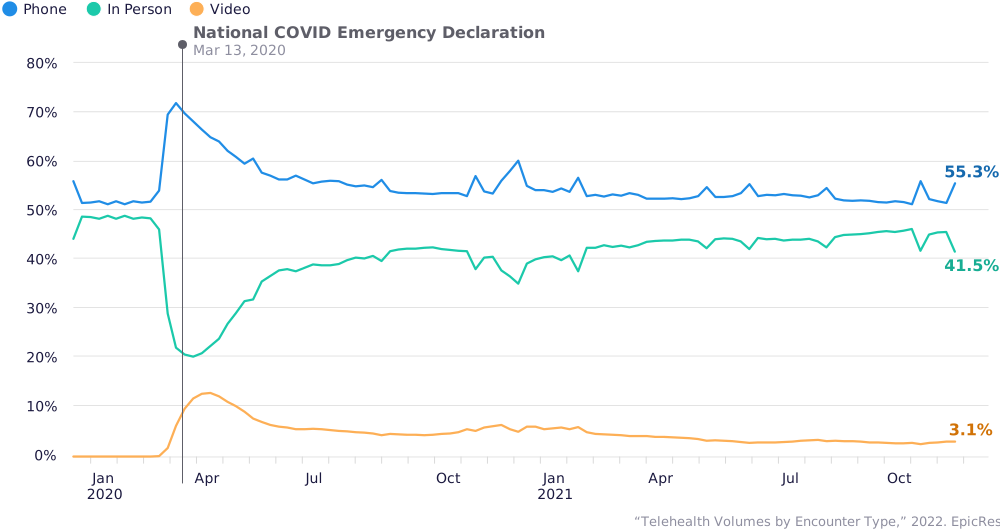
While telehealth has been a key tool in the ability to continue to provide healthcare throughout the COVID-19 pandemic, many groups have raised concern about equitable access and use of telehealth services across urban and rural areas.1 Early in the pandemic, telephone and video visits peaked at 72% and 13% of outpatient visits, respectively. As office visits returned to a greater proportion of all outpatient visits starting in late 2020, telephone and video visits leveled off, but video visits still accounted for 3% of total weekly outpatient encounters, 30 times greater than the pre-pandemic rate of 0.1%.
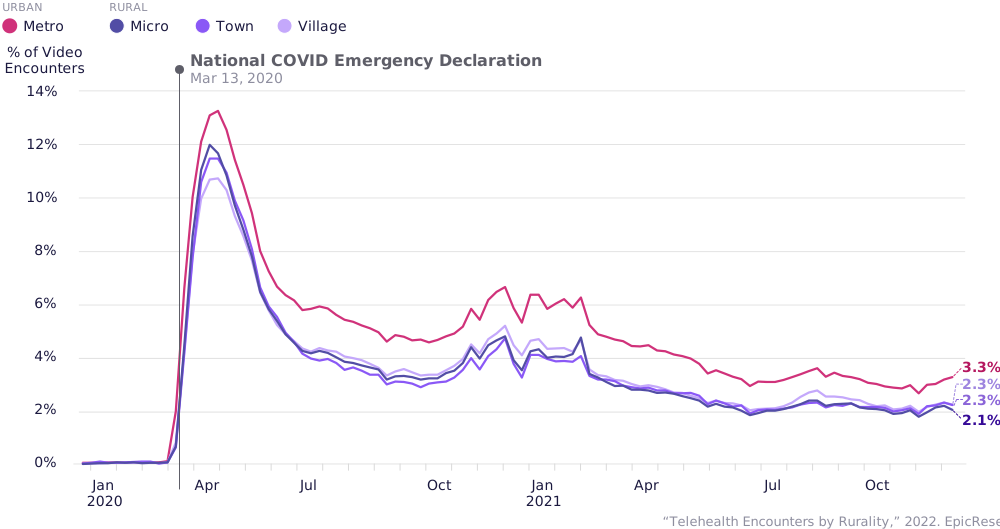
We sought to better understand where patients receiving telehealth visits live to assess whether their location is associated with greater telehealth use. Rural areas often have limited broadband access and their populations often trend toward older ages, both of which can make engaging through telehealth more challenging.2,3 Telehealth accounts for 2.1-2.3% of visits in rural areas compared to 3.3% in urban areas. Because the rates follow similar trends over time, it may be that other factors beyond broadband access and patient age, such as insurance coverage and availability of services in the patient’s primary language, are contributing to the lower rates of telehealth adoption.
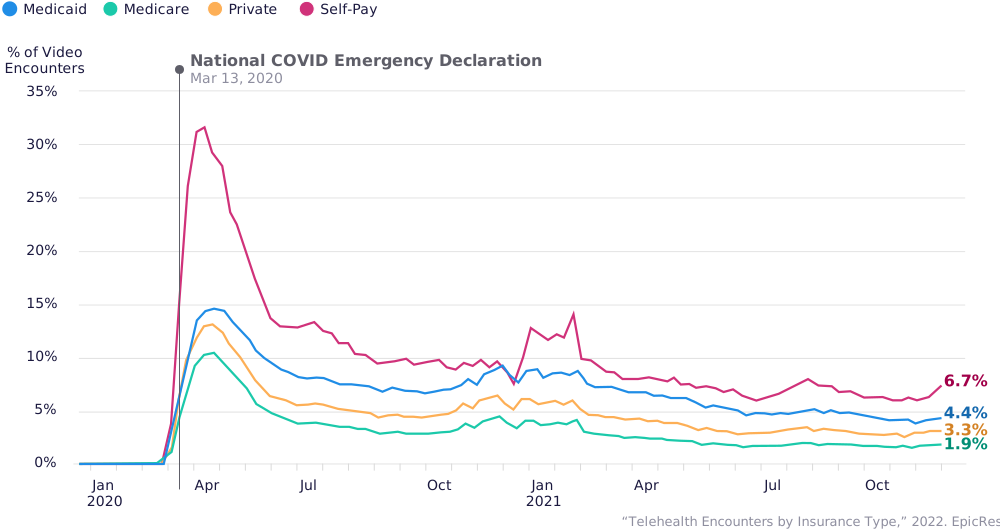
Insurance coverage for telehealth is a key factor in equitable access to care. Throughout the pandemic, insurers—including Medicare, Medicaid, and private plans—expanded coverage and reduced limitations on telehealth services.3 When comparing telehealth use by financial class, we found that those with Medicaid use telehealth more often (4.7% of visits) than those with private insurance (3.3%) or Medicare (1.9%). However, all groups had sustained telehealth use at greater rates than pre-pandemic. This highlights the benefits of expanded coverage and access options and the need to continue to support those policies and coverage beyond the pandemic period.
These data come from Cosmos, a HIPAA-defined Limited Data Set of more than 138 million patients from 161 Epic organizations, including 960 hospitals and more than 20,000 clinics, serving patients in all 50 states. This study was completed by two teams, each comprised of a clinician and research scientists who worked independently. The two teams came to similar conclusions.
This study was completed in collaboration with USDA Rural Development Innovation Center. The findings and conclusions in this brief are those of the author(s) and should not be construed to represent any official USDA or U.S. Government determination or policy.
- Centers for Disease Control and Prevention. Telehealth in Rural Communities. https://www.cdc.gov/chronicdisease/resources/publications/factsheets/telehealth-in-rural-communities.htm. Accessed on: April 15, 2022.
- Agency for Healthcare Research and Quality. Telediagnosis for Acute Care: Implications for the Quality and Safety of Diagnosis: Telehealth and Health Disparities. https://www.ahrq.gov/patient-safety/reports/issue-briefs/teledx-5.html. Accessed on: April 15, 2022.
- Lo J, Rae M, Amin K, Cox C. Outpatient Telehealth Use Soared Early in the COVID-19 Pandemic But Has Since Receded. https://www.healthsystemtracker.org/brief/outpatient-telehealth-use-soared-early-in-the-covid-19-pandemic-but-has-since-receded/. Accessed on: April 15, 2022.
