Epic Research is not viewable using Internet Explorer. Please try accessing it with an alternate browser.
Cosmos Study

Lagevrio Significantly Reduces COVID-19 Hospitalization and Death

December 6, 2022
Dual-Team Study
Team A:Karina Rohrer-Meck, MS, RNGretchen Vitek, MSN, RNEric BarkleyWilliam Kostuch
Team B:Steve Allen, MDKersten Bartelt, RNAlex Piff

Key Findings

  • In this unadjusted analysis, patients 65 years of age and older with one or more comorbidities and treated with Lagevrio (molnupiravir) have significant decreases in rates of hospitalization (1.86% vs. 3.00%) and death (0.20% vs. 0.42%) compared to those not treated with Lagevrio or Paxlovid.  

Recommended Actions

  • In line with the FDA’s Emergency Use Authorization,1 clinicians should consider Lagevrio as an alternative treatment to Paxlovid for older patients when Paxlovid and Remdesivir are unavailable or clinically inappropriate. 
  • Patients diagnosed with COVID-19 should follow up with their healthcare provider to access antiviral treatments, including Lagevrio, if they are not eligible for Paxlovid. 

In December 2021, the FDA issued an emergency use authorization for the antiviral drug Lagevrio (molnupiravir) to reduce the severity of symptoms and hospitalization in adults with mild to moderate cases of COVID-19 for whom other FDA-approved treatment options (Paxlovid or remdesivir) are not accessible or clinically appropriate. We studied 1,666,083 cases of COVID-19 in adults between December 23, 2021, and July 31, 2022. Of these cases, Lagevrio was prescribed nearly nine times less frequently than Paxlovid (21,615 Lagevrio treatments vs. 191,848 Paxlovid treatments). We also found that the population treated with Lagevrio was older on average compared to the population prescribed Paxlovid (Figure 1). 

Figure 1
Age Distribution of Treatment Groups
Figure 1. The age distribution for patients prescribed Lagevrio, Paxlovid, or neither.

To identify how Lagevrio has affected hospital admissions and deaths in COVID-19 patients, we looked at cases involving patients who were 18 and older and had at least one comorbidity and whether they were hospitalized two or more days after their initial COVID-19 diagnosis. When comparing the population that received Lagevrio to the patients who received neither Lagevrio nor Paxlovid, we found decreases in hospital admissions and deaths for the Lagevrio population within each age group (Figure 2). The largest differences were found in the 65+ age group where we found a 38.12% reduced admission rate and a 51.96% reduced death rate compared to those who took neither Lagevrio nor Paxlovid. Patients who were hospitalized less than two days after their COVID-19 diagnosis were excluded because they may not have had time to initiate treatment to prevent hospitalization. 
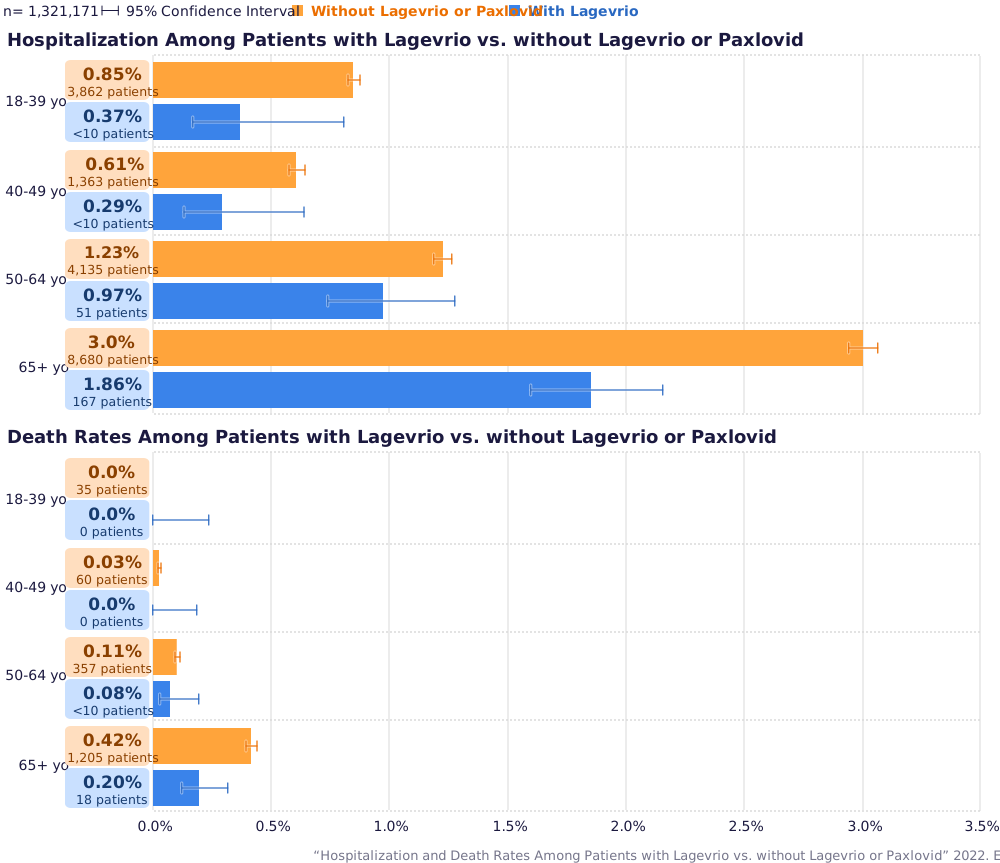
Figure 2
Hospitalization and Death Rates Among Patients with Lagevrio vs. Without Lagevrio or Paxlovid
Figure 2: Hospital admission and death rates for patients with at least one comorbidity treated with Lagevrio or with neither Lagevrio nor Paxlovid broken out by age group. Significant differences exist in the 65+ age group for both measures.

This study did not evaluate or adjust for vaccination status, comorbidity type, or socioeconomic status, which might also affect a patient’s likelihood of hospitalization or death from COVID-19.2,3 

Paxlovid remains the most widely used and efficacious antiviral drug when treating COVID-19.4,5 However, this analysis suggests Lagevrio may be a good alternative to reduce the risk of COVID-19 hospitalization or death for patients 65 and older who have comorbidities but are not eligible for Paxlovid.  


These data come from Cosmos, a HIPAA-defined Limited Data Set of more than 167 million patients from 181 Epic organizations including 1,063 hospitals and more than 22,500 clinics, serving patients in all 50 states and Lebanon. This study was completed by two teams that worked independently, each composed of a clinician and research scientists. The two teams came to similar conclusions.  

References

  1. Fact Sheet for Patients and Caregivers Emergency Use Authorization (EUA) Of LAGEVRIO™ (molnupiravir) capsules For Coronavirus Disease 2019 (COVID-19). (n.d.). Retrieved October 20, 2022, from https://www.fda.gov 
  2. CDC ACIP Meeting, October 20,2021. COVID-19 Vaccine Effectiveness for Moderna and Janssen Vaccines. (n.d.). Retrieved November 11, 2022, from https://www.cdc.gov 
  3. Lily Rubin-Miller MPH, Christopher Alban MD, Sean Sullivan MS, Samantha Artiga MHSA. Covid-19 racial disparities in testing, infection, hospitalization, and death: Analysis of Epic Patient Data. Epic Research. https://epicresearch.org/articles/covid-19-racial-disparities-in-testing-infection-hospitalization-death. Accessed November 11, 2022. 
  4. Gottlieb RL, Vaca CE, Paredes R, et al. Early Remdesivir to Prevent Progression to Severe Covid-19 in Outpatients. N Engl J Med. 2022;386(4):305-315. doi:10.1056/NEJMoa2116846 
  5. Jayk Bernal A, Gomes da Silva MM, Musungaie DB, et al. Molnupiravir for Oral Treatment of Covid-19 in Nonhospitalized Patients. N Engl J Med. 2022;386(6):509-520. doi:10.1056/NEJMoa2116044