Epic Research is not viewable using Internet Explorer. Please try accessing it with an alternate browser.
Cosmos Study

Nearly 1 in 10 COVID Patients Seek Treatment for Long-Term Symptoms

Abstract: 9.4% of patients diagnosed with COVID-19 sought treatment for symptoms that might indicate long-haul COVID.
July 20, 2021
Dual-Team Study
Team A:Karina Rohrer-Meck, BSN, RNDavid Marchena, MPSLily Rubin-Miller, MPH
Team B:Howard Bregman, MDJustin Lo, PhD, MT(ASCP)Neil Sandberg

To better understand the prevalence of long-haul symptoms after COVID-19 infection, we studied 693,375 patients diagnosed with COVID-19 who did not have prior indication of a long-haul symptom before their COVID positivity. We found that 9.4% sought treatment after their diagnosis for symptoms that might indicate long-haul COVID,1,2,3 as shown in Figure 1.
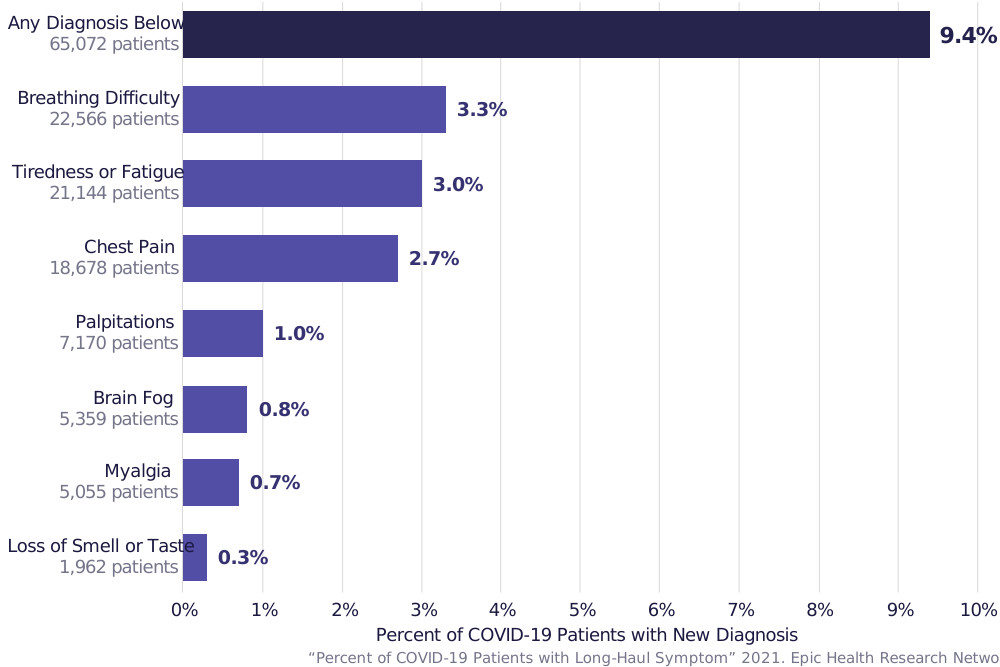
Figure 1
Percent of COVID-19 Patients with Long-Haul Symptom
Figure 1. Percentage of patients seeking treatment four weeks to six months after their COVID-19 diagnosis for symptoms that might represent long-haul COVID.

The most common diagnosis was breathing difficulty, while loss of smell or taste was the least common. The different rates of individual diagnoses might represent a difference in patients’ likelihood to seek treatment for that condition and not in how prevalent those symptoms are in the population, as our analysis is limited to symptoms reported during an encounter with a healthcare provider. We also found that female patients were more likely than male patients to have a new diagnosis consistent with long-haul COVID: 63.5% of patients with such a diagnosis were female.

These long-haul COVID diagnoses were also more prevalent in patients who had been hospitalized for COVID-19, with 15.4% of previously admitted patients and only 8.4% of non-admitted patients seeking treatment for any of the diagnoses included in the study.


These data come from Cosmos, a HIPAA Limited Data Set of more than 112 million patients from Epic customers. This study was completed by two teams, comprised of clinicians and data scientists, that independently acquired and analyzed data. Overall, the two teams came to similar conclusions. Data are pooled from 109 healthcare organizations representing 538 hospitals and 8,798 clinics during the cohort formation period.

References

  1. Centers for Disease Control (CDC). Post-COVID Conditions. https://www.cdc.gov/coronavirux/1029-ncov/long-term-effects.html. Published Apr. 8, 2021. Accessed June 23, 2021.
  2. Conte Jr, RL. COVID-19 Long Haulers: Meaning, Symptoms, Support Groups. https://covid.us.org/2020/07/12/covid-19-long-haulers-meaning-symptoms-support-groups/ Published July 12, 2020. Accessed June 23, 2021.
  3. Nalbandian A., Sehgal K., Gupta A., et al. Post-acute COVID-19 syndrome. Nat Med 27, 601–615 (2021). https://doi.org/10.1038/s41591-021-01283-z