In March 2020, the American College of Surgeons1 and the U.S. Surgeon General2 recommended stopping all non-emergency surgical procedures. Recent news articles3,4 raised concern that pandemic-related reductions in non-emergency procedures may result in delayed diagnosis and treatment. We examined procedures to diagnose and treat solid organ tumors and heart disease (Table 1). When compared to 2018-2019 averages, our analysis found a dramatic–but temporary–decrease in procedures for cardiac arrhythmia and coronary artery disease, as well as procedures for all of the major organ cancers we examined. At their lowest point, these procedure volumes were 49-88% below their historical weekly averages.
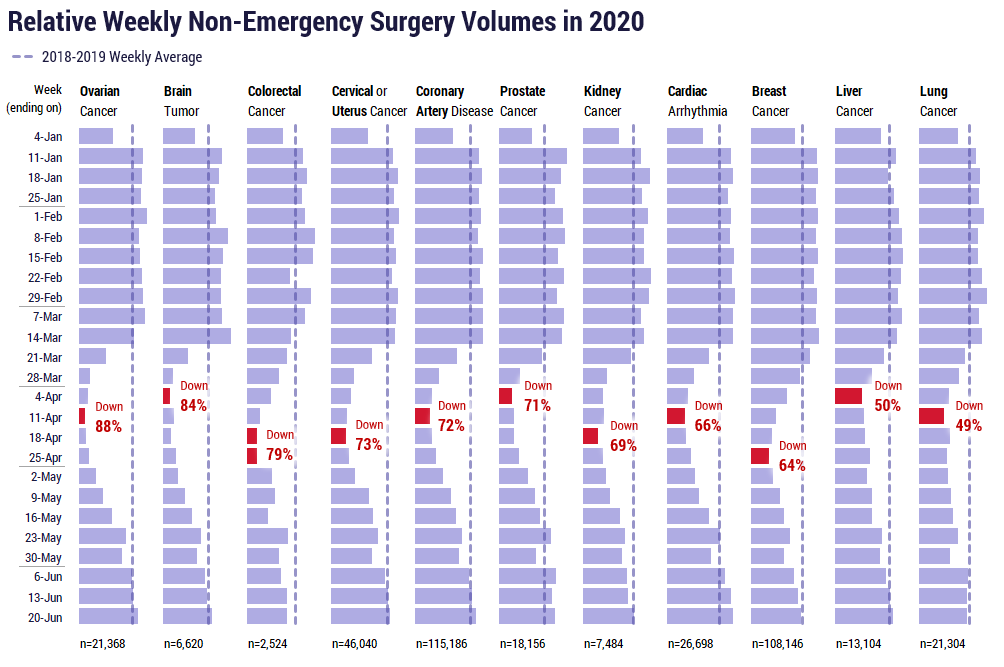
For several of the procedure groups procedure volumes in the months prior to the emergency declaration were 10-30% higher than the average of the prior 2 years, continuing an existing year-over-year trend (data not shown). The reason for this increase is unclear but may reflect natural business growth.
The volumes of most of these procedures have returned to their historical baseline, and in some cases are already above baseline. As geographic regions of the country consider further suspension of elective procedures, drops in surgical volume should be anticipated. This analysis provides evidence that there could be a delay in diagnosis and treatment initiation of some cancers and cardiac disorders. Future studies will be needed to determine if these delays will ultimately affect long-term patient outcomes.
This summary includes counts of all encounters with charges for select surgical procedures listed in Table 1 as of July 13, 2020. Data are pooled from 51 healthcare organizations representing 428 hospitals that span 22 states.


