Severe obesity, defined as having a body mass index (BMI) of 40 kg/m2 or higher, has been identified by the CDC as a risk factor for more severe COVID-19 illness.1 This brief examines the relationship between obesity and severity of illness for adult COVID-19 positive patients.
We define three obesity classes:
- Class One Obesity: BMI from 30 to 34.9 kg/m2
- Class Two Obesity: BMI from 35 to 39.9 kg/m2
- Class Three Obesity: BMI over 40 kg/m2
Data are pooled from 31 health systems representing 300 hospitals that span 18 states and cover 136 million patients, as of May 4, 2020.
In this sample of 119,582 COVID-19 positive patients, 79% have a BMI documented in their electronic medical record. Patients who have been admitted are more likely to have a BMI recorded (92%) than patients who are not admitted (68%). Among those COVID-19 positive patients with a documented BMI, 48% were obese (BMI ≥ 30 kg/m2).
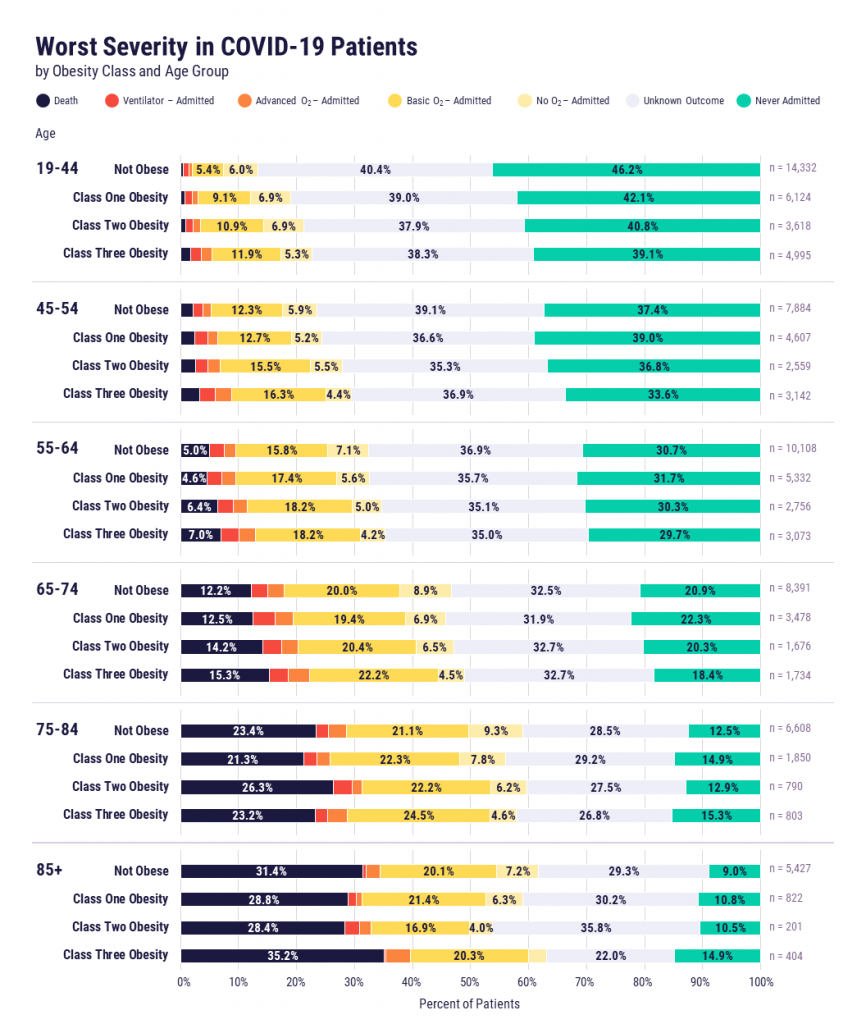
Figure 1 shows the worst severity COVID-19 positive patients reached by obesity class and age. The worst severity level reached for patients 75 and older does not appear to be impacted by obesity. For patients aged 19-74 years of age, it appears that there is a relationship between obesity and worst severity experienced, with higher levels of obesity corresponding to more severe illness. Among obese patients aged 19-74 years old, the most obese patients (Class Three Obesity) tend to fare the worst. It is important to note that approximately 20-45% of patients under the age of 75 have not had COVID-19 long enough to have a known outcome, introducing uncertainty into any potential conclusions based on these data.
Patients with obesity have a higher death rate, except for those 75 years old and above. Factors other than BMI, such as comorbidities, may be more important in outcomes for older patients.
Providers may find this information useful when assessing which patients may be at higher risk for worse outcomes.
An earlier version of Figure 1 mislabeled the percent of 45-54 year olds who are not obese with unknown outcomes. It is 39.1%, not 52.2%.


