Epic Research is not viewable using Internet Explorer. Please try accessing it with an alternate browser.
Cosmos Study

Pandemic or Not: Strep-testing Guidance Overlooked for the Majority of Prescriptions

Abstract: Many antibiotic prescriptions for acute pharyngitis are not accompanied by a diagnostic test despite best practice recommendations.
November 30, 2021
Dual-Team Study
Team A:Sam Butler, MDLily Rubin-Miller, MPHGarry Bowlin, PhD
Team B:Jim Russell, RPhJustin Lo, MT(ASCP)David Marchena

A commentary on this article was also published in NEJM Catalyst.

Even for experienced clinicians, distinguishing between sore throats of viral and bacterial origin by observation alone is particularly challenging.1 Before most patients with a sore throat are prescribed antibiotics, the American Academy of Family Physicians recommends a positive diagnostic test for group A beta-hemolytic streptococci (GABHS).2 Empiric antibiotics, or antibiotics without a test, should be limited because they aren’t effective for viral infections and because unneeded antibiotics can cause side effects and antibiotic resistance. 

Despite recommendations, antibiotics are prescribed without a streptococcal antigen test or culture in a shocking number of encounters. This trend was present before the pandemic for both virtual and in-person visits, as shown in Figure 1.  
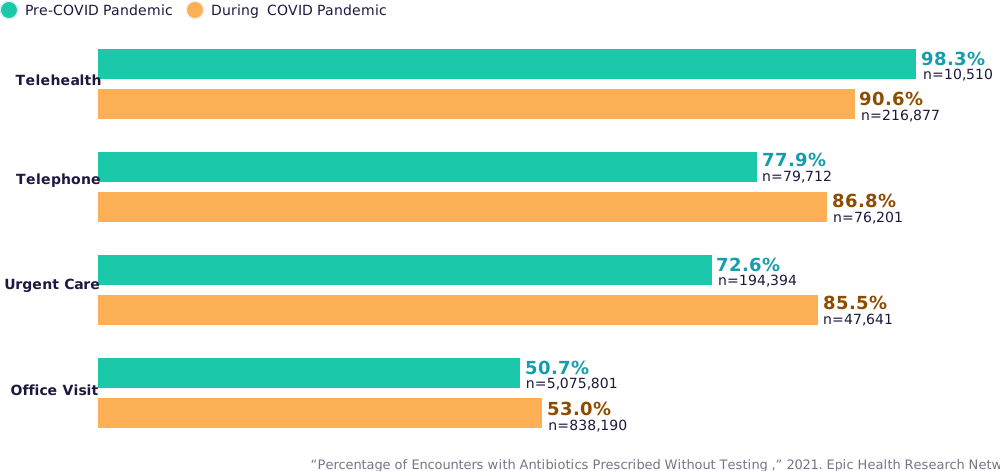
Figure 1
Percent of Encounters with Antibiotics Prescribed Without Testing
Figure 1. High percentages of encounters have antibiotics prescribed without having a diagnostic test performed first. 

We thought that, during the pandemic, there would be an increase in the percentage of sore throat encounters that had antibiotics prescribed without testing because some offices were closed. For telephone, urgent care, and office visit encounters, the percentage of encounters in which antibiotics were prescribed without testing increased from 77.9% to 86.8%, 72.6% to 85.5%, and 50.7% to 53.0%, respectively. However, the percentage of telehealth encounters in which antibiotics were prescribed without testing decreased from 98.3% to 90.6%. The large increase in telehealth use during the pandemic might have contributed to this decrease because telehealth was often used interchangeably with telephone or urgent care visits, bringing the percentage of antibiotics prescribed closer to those levels. The data could also be influenced by changes related to the overall decrease in communicable infections while patients were sheltering in place, social distancing, and wearing masks.3,4,5  

Overall, both before and during the pandemic, the rate of sore throat encounters with antibiotic prescriptions but without an accompanying strep test is alarmingly high. This rate increases the concern for future antimicrobial resistance.  


Data for this study come from Cosmos, a HIPAA-Limited Data Set of more than 118 million patients from 136 Epic organizations including 705 hospitals and 12,172 clinics, serving patients in all 50 states. This study was completed by two teams, comprised of clinicians and data scientists, that independently acquired and analyzed data. Both teams were involved in the interpretation of results and drafting of this brief. Overall, the two teams came to similar conclusions. 

References

  1. Cohen JF, Pauchard J, Cohen R, Chalumeau M. Efficacy and safety of rapid tests to guide antibiotic prescriptions for sore throat. Chchrane Review. Published June 4, 2020.
  2. Kalra MG, Higgins KE, Perez ED. Common questions about streptococcal pharyngitis. American Family Physician. https://www.aafp.org/afp/2016/0701/p24.html. Published July 1, 2016. Accessed August 18, 2021. 
  3. Bregman H, Butler S, Teriakidis A, et al. Silver Lining: Pandemic Precautions Reduced the Spread of Other Contagions. Epic Health Research Network. https://ehrn.org/articles/silver-lining-pandemic-precautions-reduced-the-spread-of-other-contagions. Published June 24, 2021. Accessed September 9, 2021. 
  4. Fox B, Rasmussen D, Teriakidis A, et al. RSV Cases Dropped by 97% During the Pandemic. Epic Health Research Network. https://ehrn.org/articles/rsv-cases-dropped-by-97-during-the-pandemic. Published June 7, 2021. Accessed September 9, 2021. 
  5. Allen S, Butler S, Gallagher K, et al. Seasonal Influenza Rates Drop to Historic Lows During the COVID-19 Pandemic. Epic Health Research Network. https://www.ehrn.org/articles/seasonal-influenza-rates-drop-to-historic-lows-during-the-covid-19-pandemic. Published May 6, 2021. Accessed September 9, 2021