Epic Research is not viewable using Internet Explorer. Please try accessing it with an alternate browser.
Cosmos Study

Post-op Opioid Prescription Amounts Decreasing, But Not Yet at Recommended Levels

Abstract: Opioids prescribed after same-day surgical procedures decreased by 50% from 2017 to 2020 yet still do not meet expert recommendations.
May 12, 2021
Dual-Team Study
Team A:Dave Little, MDAlejandro Muñoz del Río, PhDXander Posner, MPH
Team B:Steve Allen, MDJustin Lo PhD, MT(ASCP)Dan Gruett

The number of opioids patients receive after surgical procedures has a significant impact on their risk of developing chronic opioid use1,2. Several expert panels have issued recommendations for safe opioid prescribing for the maximum number of opioid tablets that should be prescribed following common outpatient procedures3, 4, 5.

We studied the median number of opioid tablets prescribed after same-day surgical procedures in the U.S. The number of tablets containing 5 mg of oxycodone, corresponding to 7.5 MME (morphine milligram equivalents), decreased by half between January 2017 and December 2020, though it remains higher than best-practice recommendations for some procedures. While the number of tablets per prescription decreased, there were not fewer opioid prescriptions overall.

Number of Post-Surgical Opioid Tablets Prescribed

Figure 1 shows the opioid prescribing habits over the last four years for 10 common procedures. For the four orthopedic procedures we studied, the median number of tablets prescribed decreased by half but is still above recommended quantities. Of the six non-orthopedic surgery procedures we studied, four now meet recommendations.
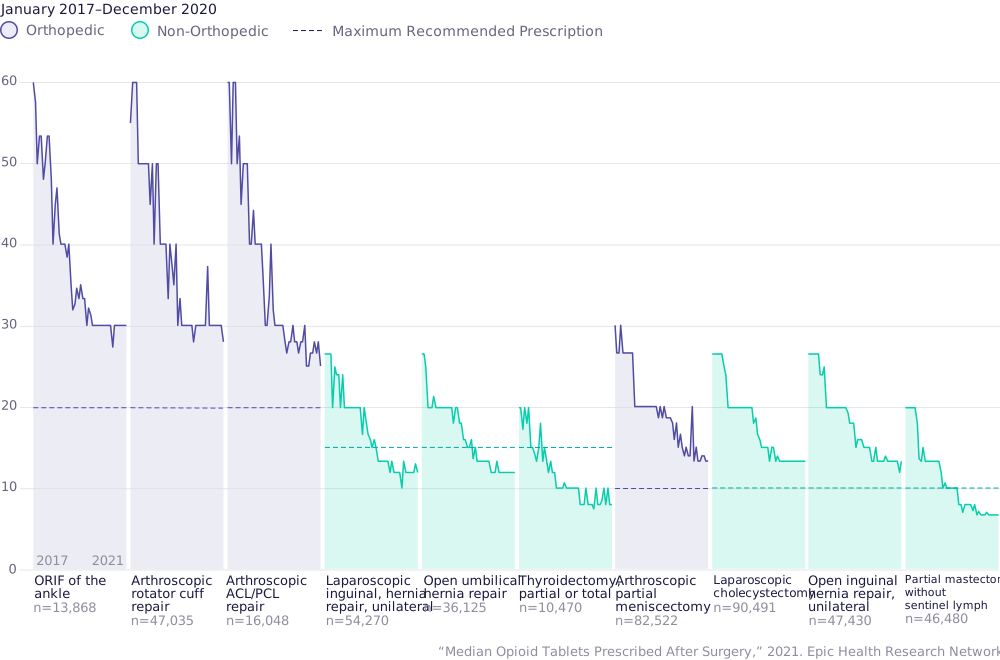
Figure 1
Median Opioid Tablets Prescribed After Surgery by Procedure
Figure 1: Median number of opioid tablets (5 mg oxycodone tablet, corresponding to 7.5 MME) prescribed after 10 common same-day surgical procedures from January 2017 through December 2020. The solid lines represent the number of tablets prescribed, and the dashed lines indicate the maximum recommended amounts3 for those procedures.

Number of Post-Surgical Opioid Prescriptions Written

The number of procedures followed by an opioid prescription remained stable over the past four years. Of those prescriptions, the percentage with quantities of opioid tablets greater than expert recommendations has decreased but is still not meeting recommendations for most prescriptions.
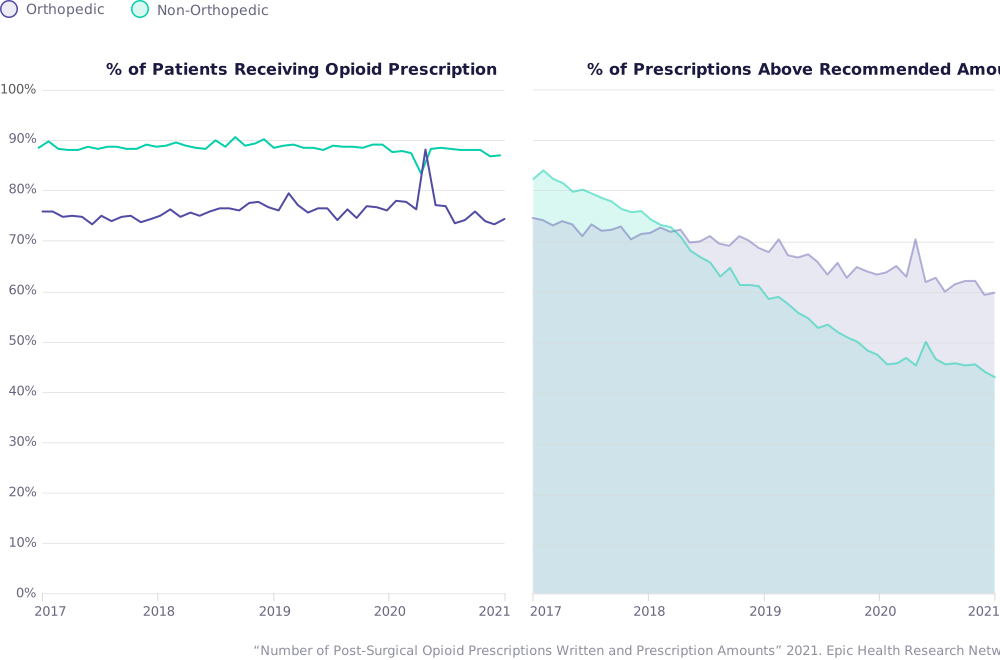
Figure 2
Number of Post-Surgical Opioid Prescriptions Written and Prescription Amounts
Figure 2: The left graph represents the percentage of surgical procedures followed by an opioid prescription. The right, shaded graph represents the percentage of those prescriptions that included more tablets than the expert recommendations3 indicate.

While fewer opioid tablets are being prescribed per prescription across procedures, there is still room for improvement to better align with recommendations for decreasing post-surgical opioid prescriptions.


This study was completed by two teams (A: DL, AMR, XP; B: SA, JL, DG), each comprised of a clinician and two data scientists, that independently acquired and analyzed data. Both teams were involved in the interpretation of results and drafting of this brief. Overall, the two teams came to similar conclusions. We pooled data from 87 organizations for opioid prescriptions following same-day surgical procedures performed at least 200 times a month on average between January 2017 and December 2020. This study examines only prescriptions written for opioid-naive adult patients. The study examines prescriptions as written, not the number of tablets dispensed, administered, or taken. Download this study to see the data definitions used.

References

  1. Sun EC, Darnall BD, Baker LC, Mackey S. Incidence of and Risk Factors for Chronic Opioid Use Among Opioid-Naive Patients in the Postoperative Period. JAMA Intern Med. 2016;176(9):1286–1293. https://www.doi.org/10.1001/jamainternmed.2016.3298
  2. Brat G A, Agniel D, Beam A, Yorkgitis B, Bicket M, Homer M et al. Postsurgical prescriptions for opioid naive patients and association with overdose and misuse: retrospective cohort study BMJ 2018; doi: https://doi.org/10.1136/bmj.j5790
  3. Overton HN et al. 2018 Opioid-Prescribing Guidelines for Common Surgical Procedures: An Expert Panel Consensus J Am Coll Surg 27(4): 411-418. https://doi.org/10.1016/j.jamcollsurg.2018.07.659
  4. Hansen A et al. 2020 ICSI Adult Opioid Postoperative Prescribing Toolkit. ICSI (Inst. For Clinical Systems Improvement). Minneapolis, Minnesota. https://media.epic.com/epicresearch/wordpressmedia/legacy/2020/09/ICSI-Opioid-Postop-Toolkit-FINAL-09.14.20.pdf
  5. OPEN (Opioid Prescribing Engagement Network- Michigan) 2020 https://michigan-open.org/prescribing-recommendations/
  6. Gerbershagen HJ, Aduckathil S, Van Wijck AJM, et al. Pain Intensity on the First Day after Surgery: A Prospective Cohort Study Comparing 179 Surgical Procedures. Anesthesiology 2013; 118:934-944. https://doi.org/10.1097/ALN.0b013e31828866b3