As the COVID-19 pandemic sweeps the globe, there is a rush to find medications that, if taken before COVID-19 is acquired, may be protective against infection. Clinical trials are currently examining drugs in many different classes including antimalarials, antivirals, angiotensin converting enzyme inhibitors, angiotensin receptor blockers, interleukin inhibitors, and more.1
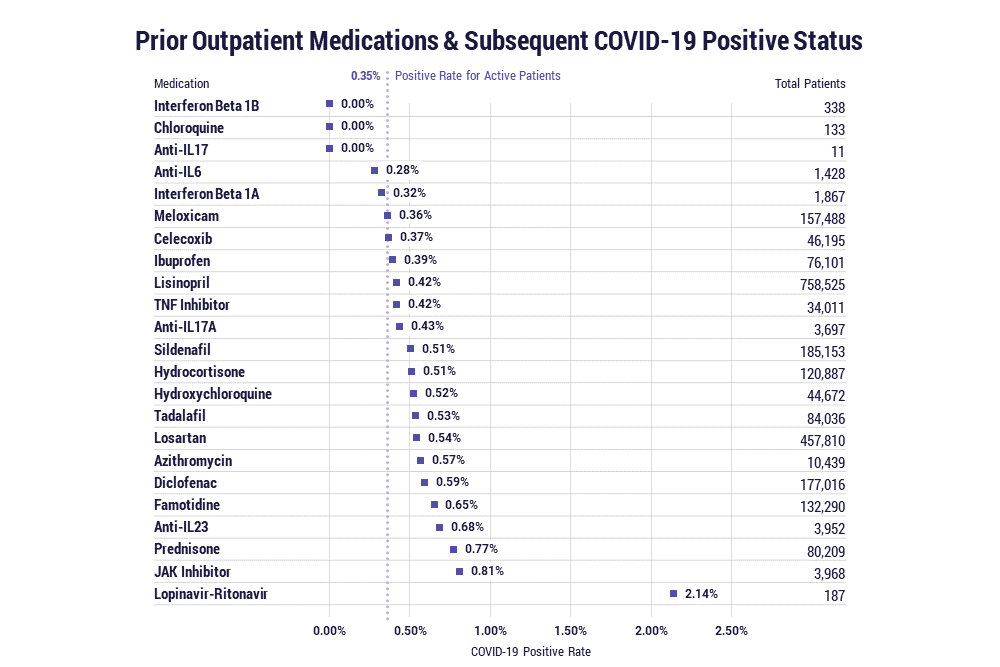
Figure 1 shows the percentage of patients who acquire COVID-19 after taking each medication chronically. The classes of medications in this chart below are used to treat other chronic conditions in outpatient settings. We looked at the rate of COVID-19 positivity in active patients who are currently prescribed one or more of these medications prior to being tested for COVID-19. The chart also contains a reference point for the overall rate of COVID-19 positivity for all active patients, which was 0.35% in the data set.
The 30 medications2 included were selected based on early questions from community researchers and therapeutics being considered for outpatient or inpatient clinical trials. Data are pooled from 31 health systems that represent 300 hospitals, spanning 18 states and covering 36 million active patients, collected on April 30, 2020.
The sample sizes for the number of total patients taking each medication chronically are also included in Figure 1. Many of the medications with the smallest sample sizes appear at either extreme. We expect the COVID-19 positive rate for those medications to change over time as a larger number of patients test positive for COVID-19, either due to spread of the disease or due to increased testing.
The data do not point to an obvious medication with COVID-19 protective effects, but may be useful to researchers who are studying the use of chronic medications.