There has been an increase in telehealth visits across multiple specialties since the start of the pandemic.1 Prior to the pandemic, children needing evaluation for cognitive delays were seen in person. During the pandemic, many children needed to complete testing via telehealth, also known as teletesting. Although studies2 show telehealth is increasing as a method for providing cognitive therapies, psychologists were concerned that administering cognitive and academic evaluations via teletesting may not be valid since those tests were designed for in-person evaluations.
Researchers from Kennedy Krieger Institute and Johns Hopkins School of Medicine and Public Health studied whether the KTEA-3 and WISC-V tests yielded similar results when administered remotely via teletesting as compared to traditional in-person testing. In their study, published in the Journal of the International Neuropsychological Society, Jacobson and colleagues demonstrated no clinically significant differences in the results of the tests, regardless of delivery method. There were slight differences in two of the subsections, Math Concepts (p<0.01) and Visual Puzzles (p=0.03), but the magnitude of these differences were quite small. You can access the full study here.
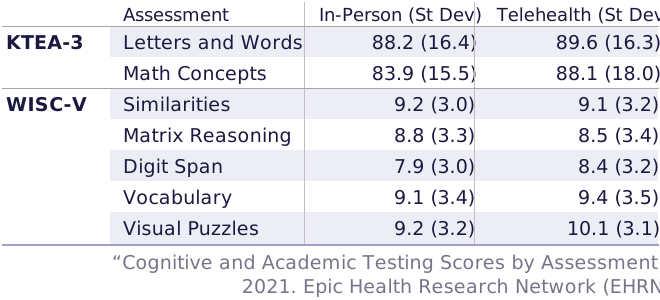
Studies such as this can facilitate better understanding of care delivery options to expand care accessibility without detrimental effects to patient outcomes. As pointed out by the authors, “Teletesting has critical implications for reducing longstanding barriers related to distance/transportation and subsequent disparities in care.”


