


Patients who are more engaged in their healthcare often have better outcomes.1 Because patient portal use is one marker of engagement, we wondered whether access to a patient portal correlated with hospital length of stay for certain conditions. To test this, we looked at two different types of admissions: admissions for new illness (COVID-19) and admissions for chronic illness (heart failure). Patients who were hospitalized for either COVID-19 or heart failure were more likely to have shorter hospital stays if they had an active patient portal account.
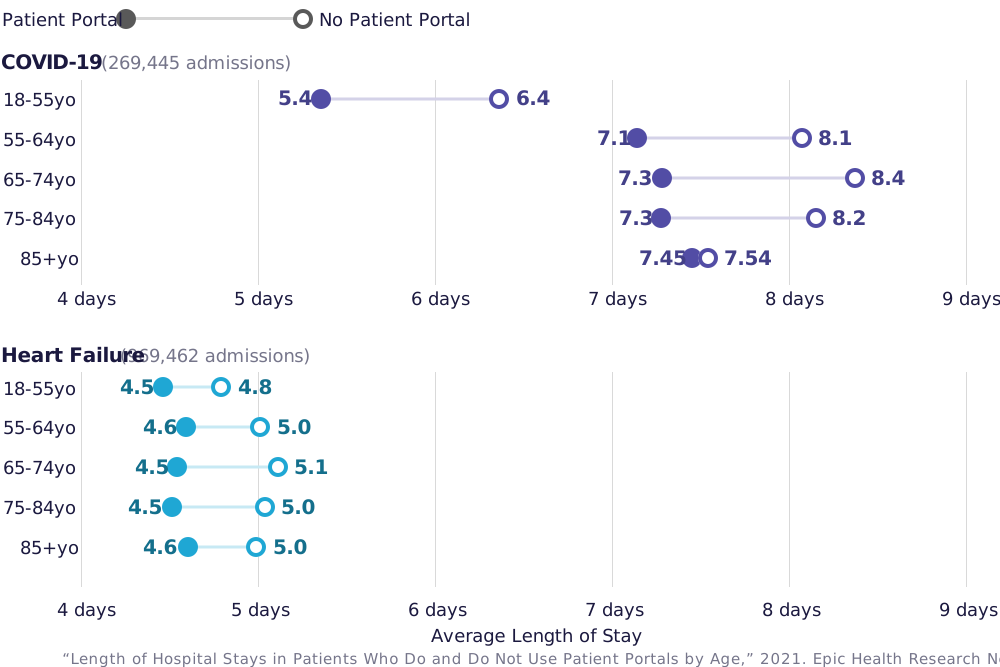
As shown in Figure 1, having an active patient portal account was associated with a shorter average length of stay in the hospital. The difference was larger for COVID-19 patients than for heart failure patients. In COVID patients, having an active patient portal account was associated with an average length of stay shorter by 0.09 to 1.1 days, while in heart failure patients, using a patient portal was associated with an average length of stay shorter by 0.3 to 0.6 days.
The difference in length of stay was present for all age groups included in the study, though it was smaller for patients 85 years and older. The percentage of patients with an active patient portal account was also smaller in the 85-and-older group than in the other age groups included in the study, as shown in Figure 2 below.
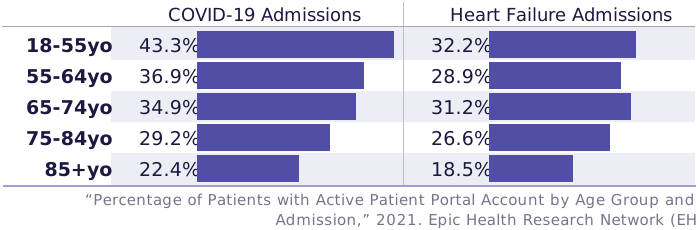
While there is a complex interaction of factors that contribute to a patient’s length of stay, such as the patient’s diagnoses, acuity, and social determinants2, our data show that a more engaged patient, as defined by an active patient portal account, may contribute to a decreased length of stay.
