Epic Research is not viewable using Internet Explorer. Please try accessing it with an alternate browser.
Cosmos Study

Sicker Patients, More Admissions: How COVID-19 has Changed Emergency Care

Abstract: Despite lower ED volumes, emergency caregivers might be more susceptible to burnout due to higher acuity patients and staffing shortages.
March 8, 2022
Christopher Alban, MD | Eric Barkley | Caleb Cox

Like healthcare visit volumes in the outpatient space, emergency department (ED) visit volumes dropped significantly at the beginning of the pandemic and had not yet recovered as of early 2021.1 While weekly ED visit volume has increased, volumes declined again to 12% fewer visits than expected as the pandemic continued through the remainder of 2021, as shown in Figure 1. These decreased volumes, however, don’t mean less work for ED physicians, nurses, and caregivers.
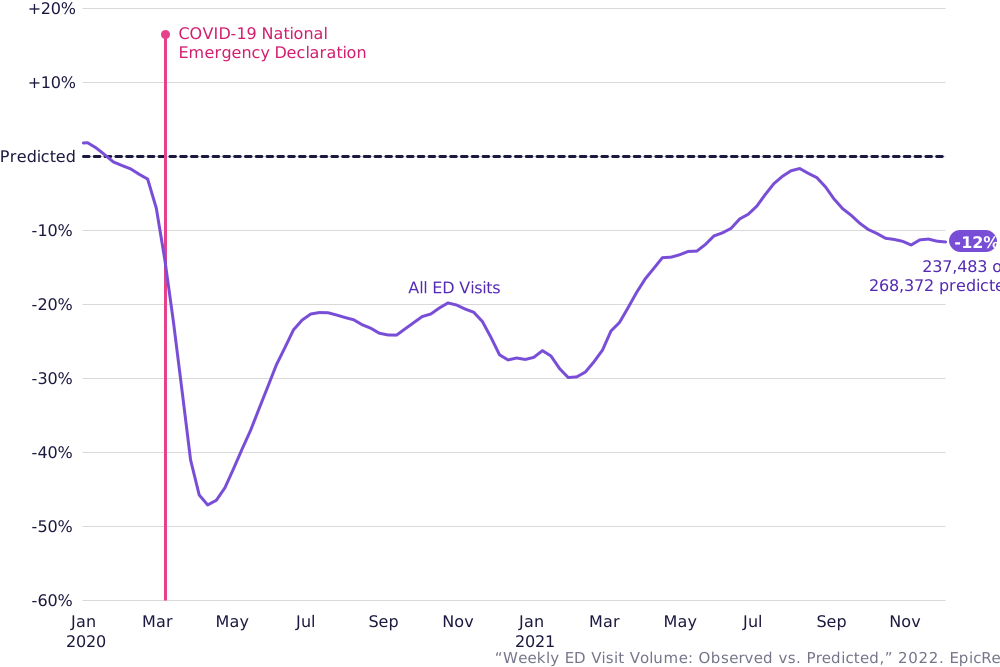
Figure 1
Weekly ED Visit Volume: Observed vs. Predicted
Figure 1. Five-week rolling average of weekly ED visit volume as a percent deviation from the volume predicted for the period of December 29, 2019, to December 11, 2021. Visit volumes were predicted by a model based on weekly ED visit volume from January 1, 2017, to January 25, 2020.

Although visit volumes are down, patients coming to the ED are more likely to have higher acuity problems and be admitted to the hospital, while healthcare organizations are experiencing record-high staffing shortages, increasing the likelihood of burnout in ED staff.2,3 Several studies have documented the increased incidence of burnout in providers who largely care for high-acuity patients.4 Burnout can also contribute to staffing shortages, as caregivers choose to leave the profession or seek other work, which can lead to even more burnout for remaining staff.4

To quantify the increase in acuity in the ED, we examined ED visits with five different diagnoses over time to evaluate the degree of change. Stroke and AMI were used to represent higher acuity diagnoses, while conjunctivitis and dermatitis were used as examples of lower acuity diagnoses. By the end of December 2021, the prevalence of all diagnoses had increased from their lowest levels, which were seen shortly after the initial emergency declaration. However, while higher acuity diagnoses of stroke and AMI were near or above the levels predicted by pre-pandemic trends in the latter half of 2021, the lower acuity diagnoses of dermatitis and conjunctivitis remained well below predicted levels at 24% and 41% lower than expected, respectively.
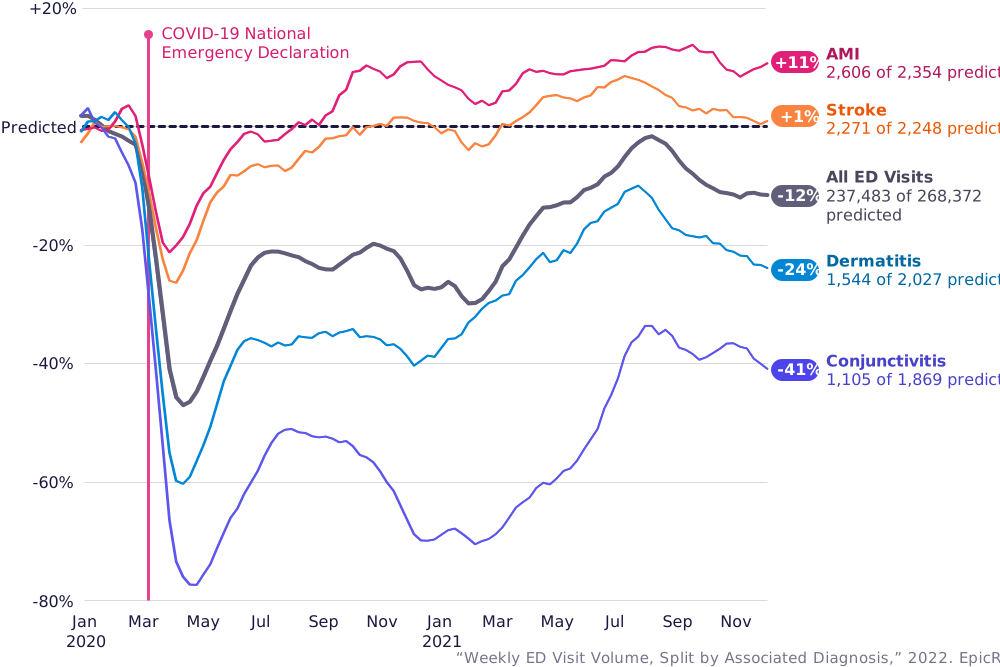
Figure 2
Weekly ED Visit Volume, Split by Associated Diagnosis
Figure 2. Five-week rolling average of weekly ED visit volume as a percent deviation from predicted volume, split by associated diagnosis, for the period of December 29, 2019, to December 11, 2021. The solid black line represents overall ED visits, while the other solid lines correspond to visits with specific diagnoses (pink: AMI; orange: stroke; blue: dermatitis; purple: conjunctivitis).

As another indicator of acuity, we looked at how many patients were admitted to the hospital from the ED compared to the predicted volume. While the admission rate fell from its early pandemic high, it remains 21% higher than predicted.
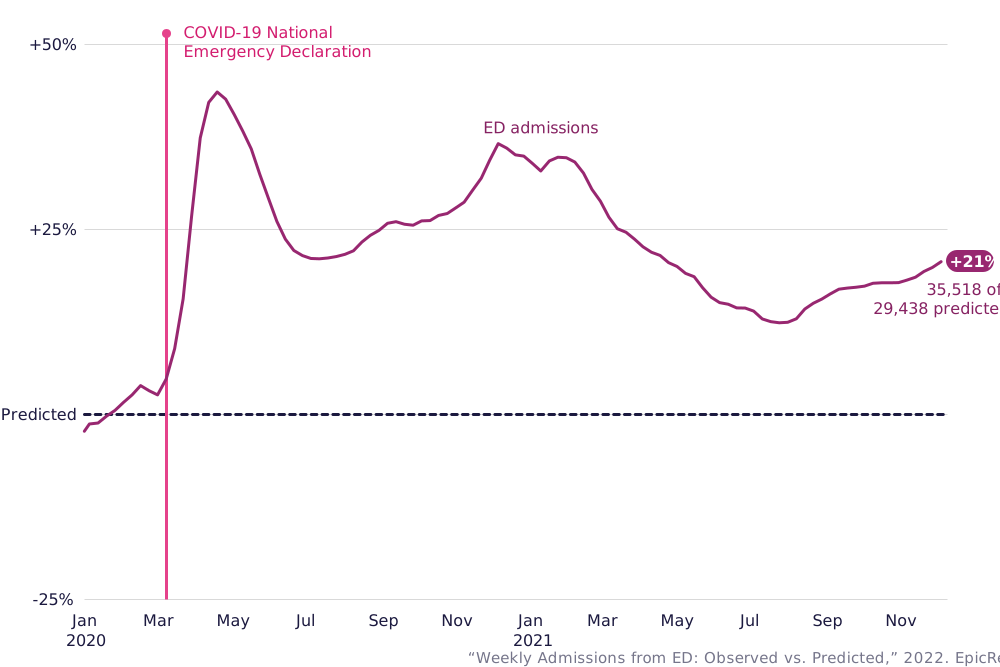
Figure 3
Weekly Admissions from ED: Observed vs. Predicted
Figure 3. Five-week rolling average of weekly percentage of ED visits resulting in hospital admission as a percent deviation from the percentage predicted for the period of December 29, 2019, to December 11, 2021. The percentage admitted was predicted by a model fit based on weekly ED visit statistics from January 1, 2017, to January 25, 2020.

Our findings suggest that healthcare organizations should consider expanding organizational support for staff to reduce burnout beyond the ICU as ED caregivers experience sustained rates of higher-acuity care. Additionally, as ED providers are well-suited for providing unscheduled care, organizations might consider additional opportunities to engage ED providers in the lower-acuity telehealth or urgent care spaces to provide a potential respite from higher-acuity care.


These data come from Cosmos, a HIPAA-defined Limited Data Set of more than 126 million patients from 156 Epic organizations including 889 hospitals and 19,420 clinics, serving patients in all 50 states.

References

  1. Alban C, MD; Berry D, PhD; Butler S, MD et al. Fewer Visits, Sicker Patients: The Changing Character of Emergency Department Visits During the COVID-19 Pandemic. https://ehrn.org/articles/fewer-visits-sicker-patients-the-changing-character-of-emergency-department-visits-during-the-covid-19-pandemic. Epic Research. Published Feb 3, 2021.
  2. National Public Radio. https://www.npr.org/sections/health-shots/2021/10/26/1046432435/ers-are-now-swamped-with-seriously-ill-patients-but-most-dont-even-have-covid. Published Oct 26, 2021.
  3. Lindemann P; McAllister M; McNitt J; Sizemore, O, PhD;  Teriakidis A, PhD. COVID-19 Impact on Nurse Staffing and ICU Beds. Epic Research. https://epicresearch.org/articles/covid-19-impact-on-nurse-staffing-and-icu-beds. Published January 5, 2021.
  4. Moss M; Good V S; Gozal D; Kleinpell R; Sessler C N. An Official Critical Care Societies Collaborative Statement-Burnout Syndrome in Critical Care Health-care Professionals. Chest. 2016. https://doi.org/10.1016/j.chest.2016.02.649.
