


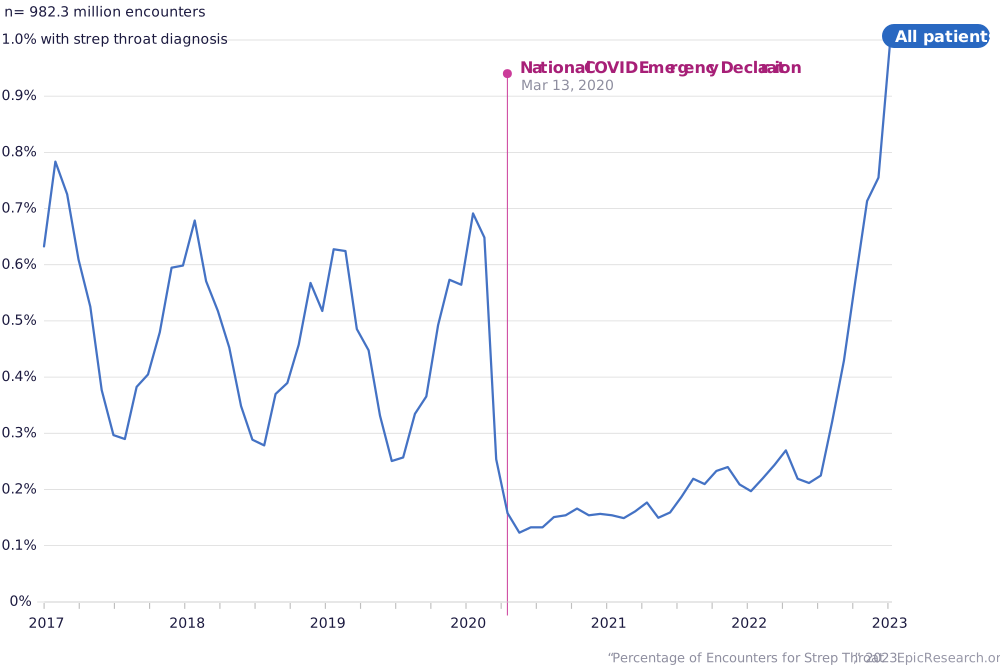
In February 2023, the Centers for Disease Control and Prevention (CDC) noted an increase in group A Streptococcus, or strep, infections, particularly in children.1 Given this, we wanted to understand how the incidence of strep pharyngitis and strep tonsillitis (strep throat) in 2022 and 2023 compares to previous years. We identified 3.3 million strep throat infections across 982.3 million encounters from January 1, 2017, to February 28, 2023.
From January 2017 through February 2020, strep throat infections followed a seasonal pattern, typically starting to increase in September and peaking at between 0.63 and 0.74% of encounters in February each year. Similar to other infectious respiratory illnesses like influenza and RSV, strep throat encounters dramatically decreased in March 2020, coinciding with the start of the COVID-19 pandemic. Rates remained low (less than 0.28% of encounters) but began to rise again in September 2022. As of February 2023, strep throat encounters increased to a rate nearly 30% greater than the previous peak seen in February 2017 (0.74% to 1.0% of encounters), as shown in Figure 1.
These findings of increased encounters for strep throat held true across all social vulnerability index (SVIs) quartiles, all U.S. census regions, and all races. Strep throat diagnoses were most common in patients ages 4-13, but all age groups followed similar trends, as shown in Figure 2.
These findings support the CDC’s preliminary reports of increased strep activity in 2022 and 2023, especially in children.1
