ExpandSevere COVID Less Likely in Children with the Bivalent Vaccine
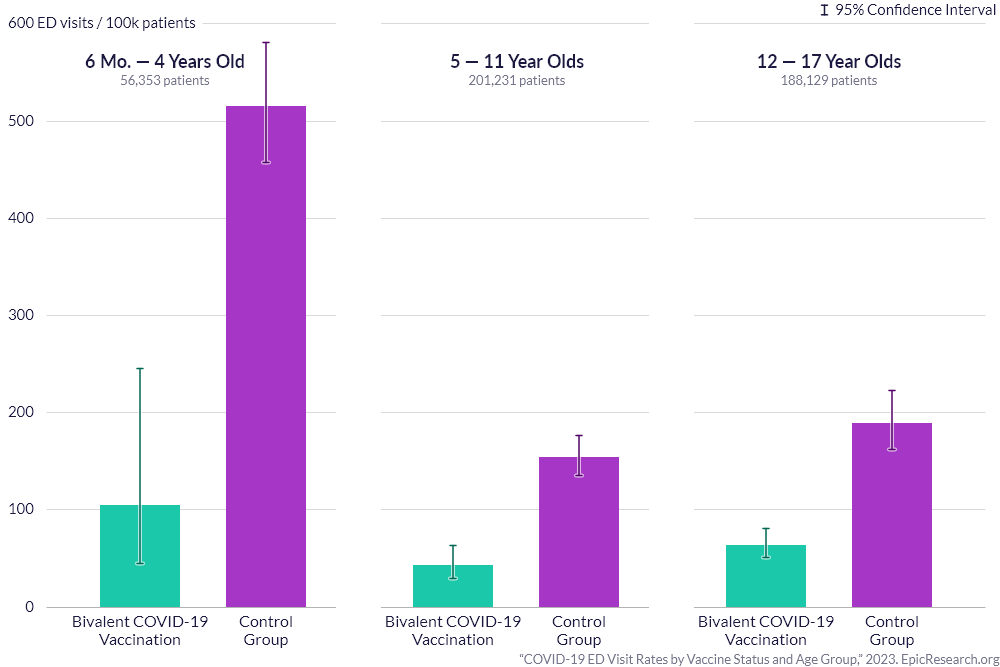
Pediatric patients who received the bivalent COVID-19 vaccine had lower rates of COVID-19-related emergency visits compared to children who had not received any COVID-19 vaccine.
ExpandPediatric patients who received the bivalent COVID-19 vaccine had lower rates of COVID-19-related emergency visits compared to children who had not received any COVID-19 vaccine.
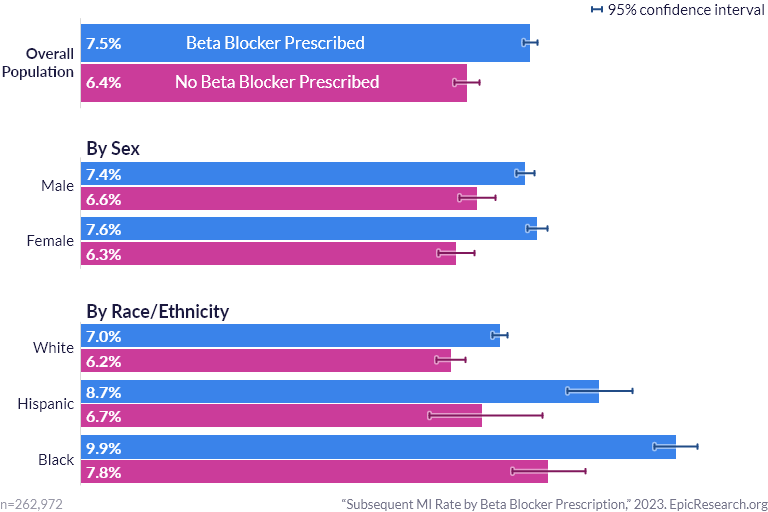
ExpandAfter an initial myocardial infarction, patients prescribed a beta blocker did not show improvement in the rate of subsequent myocardial infarction within the next year.
ExpandOnly 18.8% of 9-11-year-olds and 5.5% of 2-8-year-olds with identified cardiovascular risk are screened for high lipid levels, which are known to increase cardiovascular disease risk.
ExpandChronic kidney disease was diagnosed earlier in 2021 and 2022 compared to previous years as shown by increases in average estimated globular filtration rate (eGFR) at initial diagnosis.
ExpandCardiovascular conditions are less common in the 30 days after mRNA monovalent or bivalent vaccination than after influenza vaccination.
ExpandTwo in three Mpox cases prevented in patients fully vaccinated with JYNNEOS. Even one dose of JYNNEOS provided some protection against Mpox infection.
ExpandIn patients prescribed antidepressants, the greatest risk of novel self-harm is seen in the first weeks of initial treatment and not after stopping treatment.
ExpandKetamine is increasingly being used for treating depression. Despite an increasing rate of ketamine prescriptions and concern regarding misuse, ketamine overdoses have remained infrequent.
ExpandSemaglutide injections, also known as Ozempic and Wegovy, lead to weight loss in both diabetics and non-diabetics. This study is an observational analysis of the data and not a recommendation for use of semaglutide as a treatment, since the side effects must be considered.
ExpandDespite significant drops in 2020 and low rates in 2021 through the beginning of 2022, strep throat infections exceeded their 2017 peak by 30% in February 2023.
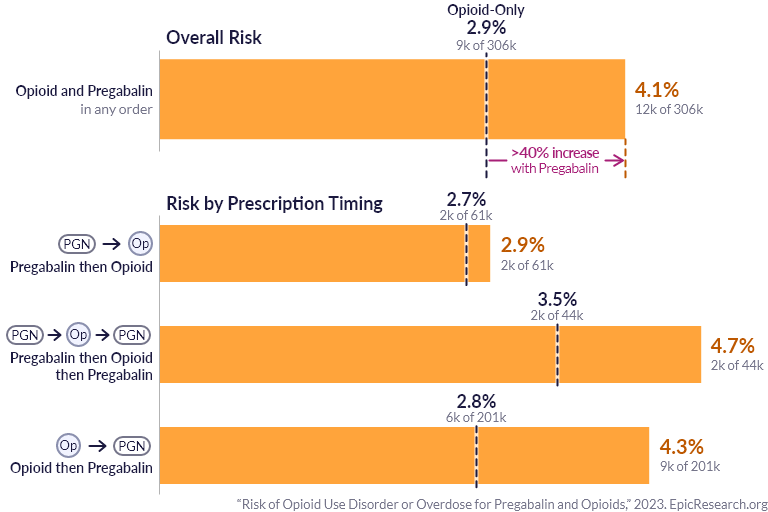
ExpandPatients prescribed gabapentin and opioids have an increased risk of developing opioid use disorder (OUD) or experiencing an opioid-related overdose compared to patients prescribed only opioids.
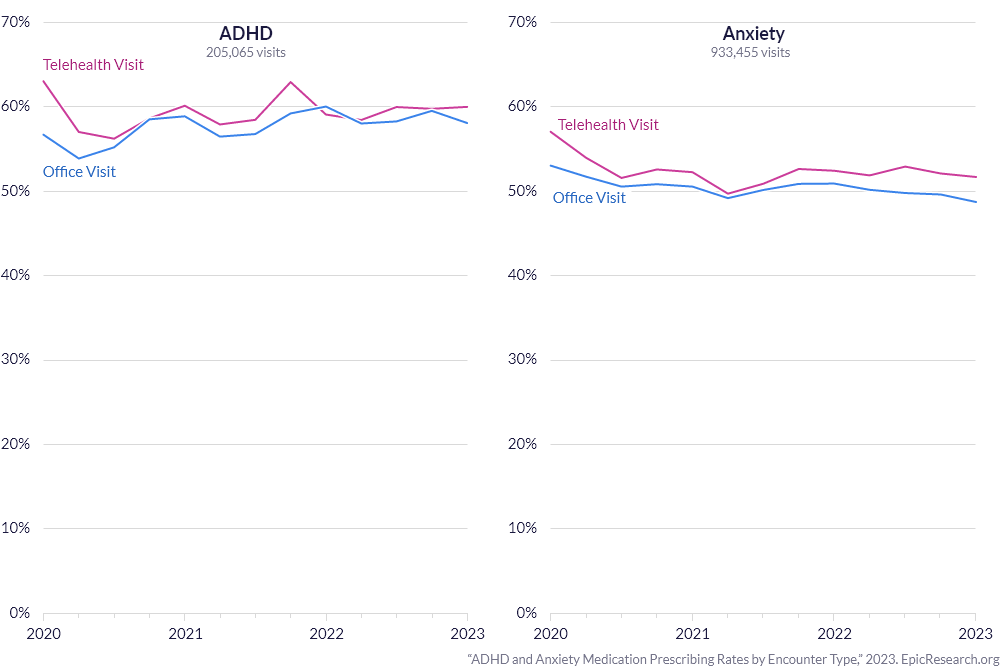
ExpandThe proportion of ADHD patients with stimulant prescriptions has remained between 61 and 64% for nearly 10 years.
ExpandBabies born to women who test positive for COVID-19 during pregnancy showed slightly elevated rates of congenital cardiovascular defects, heart rhythm abnormalities, metabolic disorders, and perinatal respiratory disorders during the infant’s first year of life.
ExpandSince USPSTF updated its guidelines in 2021, there has been an increase in colorectal cancer screening rates, most significantly in 45–49-year-olds. There has also been an increase in polyp and colorectal cancer diagnoses in 45–49-year-olds.
ExpandDespite studies suggesting an increased risk of stroke after influenza infection, we do not see this trend on a population level.
ExpandFollowing a primary care telehealth visit, 61% of patients did not have an in-person visit in the same primary care specialty in the next 90 days.
ExpandDespite reduced screening rates during the pandemic, there has not been a significant increase in new cancer diagnoses or advanced cancer diagnoses, but it might be too early to tell.
ExpandCDC and Epic Research collaboration using real-world evidence from Cosmos shows JYNNEOS is effective at reducing risk of mpox disease.
ExpandPostpartum patients with higher blood pressure readings before discharge were more likely to be readmitted within six weeks than those with lower blood pressure readings.
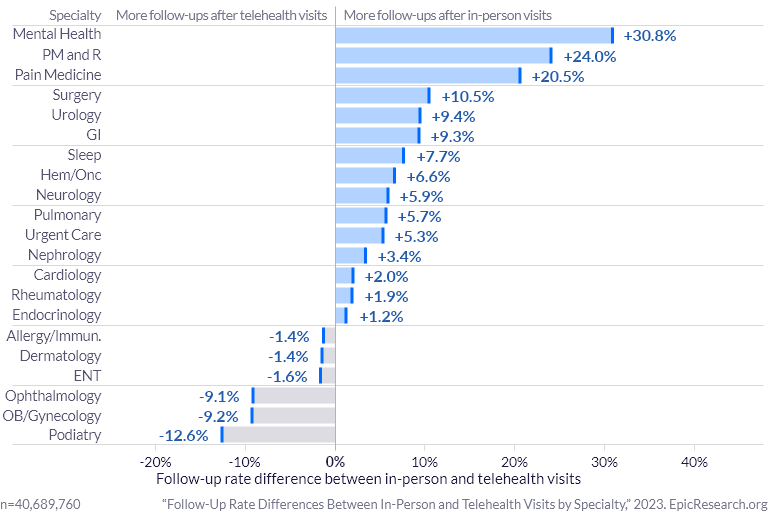
ExpandFor most specialties, telehealth visits are not duplicative of in-person visits and can be used as an alternative or even replacement for in-person visits.