Epic Research is not viewable using Internet Explorer. Please try accessing it with an alternate browser.
Displaying 241-260 of 312 Articles

All Articles

Weekly Immunization Administrations During COVID-19Expand
September 9, 2021

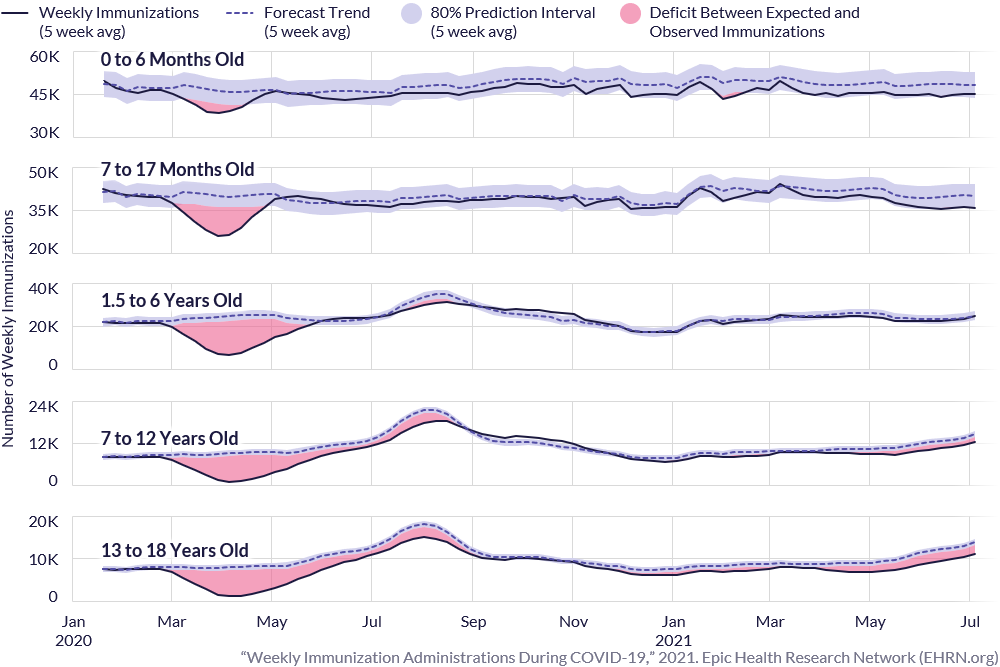
Non-COVID Vaccination Numbers Are Lagging for Teens, Rebounding for Younger Kids

A previous EHRN study showed that immunizations for pediatric patients decreased by 42% in the spring of 2020. We completed a follow-up study of 6,525,735 pediatric patients to assess whether pandemic-era immunization rates for CDC-recommended immunizations have returned to historical rates. As shown in Figure 1, younger age groups have largely returned to predicted levels while older groups have remained below expected levels.

Percentage of Patients with One or More COVID-Related Claims Through 180 DaysExpand
September 1, 2021

After Their Initial Diagnosis, Many Adult COVID-19 Patients Continue Seeking Medical Care for up to Six Months or More

Definitions and guidance regarding the evaluation and care for patients with “Long COVID,” post-COVID conditions or PASC (post-acute sequalae of COVID-19) continues to evolve. We sought to describe health care utilization over time after an initial COVID-19 diagnosis. For the purpose of this analysis, follow-up after a health care claim with a confirmed or probable COVID-19 diagnosis was divided into three timeframes including a ≤30-day acute period and 2 subsequent post-acute periods of 31-90 days and 91-180 days.

Early 2021 Data Show No Rebound in Health Care UtilizationExpand
August 17, 2021

Early 2021 Data Show No Rebound in Health Care Utilization

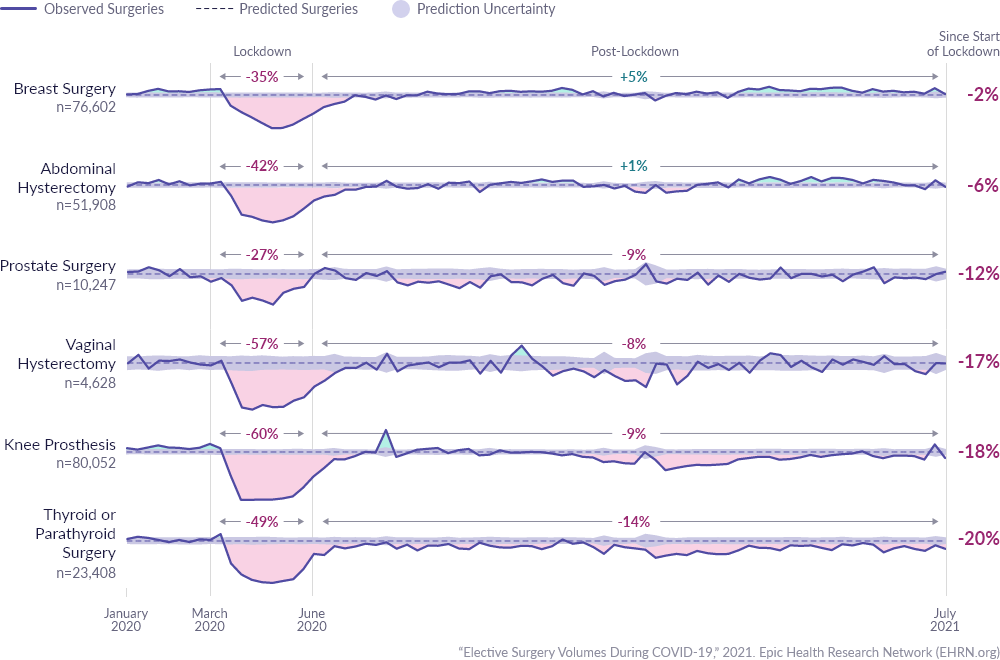
Early in the COVID-19 pandemic, stay-at-home measures, potential risk of COVID infection at a hospital or doctors’ offices, and concerns over hospital capacity led to sharp declines in health care utilization and spending, including drops in hospital admissions for both acute and elective procedures. There was also a drop in preventive service use. Spending decreased across all health services. While telemedicine use increased rapidly during the pandemic, it did not offset the decrease in in-person care.

Body Mass Index (BMI) and A1C ControlExpand
August 11, 2021

Better BMI Associated with Better Diabetic Control

More than 32 million Americans have type 2 diabetes, with an estimated 1.8 million new cases diagnosed each year. An elevated BMI is a known risk factor for the development of type 2 diabetes. We investigated whether a patient’s BMI was associated with greater diabetic control, as indicated by an A1C of less than 7% one year from initial diagnosis.  

Preterm and Low Birth Weight by Vaccination StatusExpand
August 11, 2021

COVID-Vaccinated Mothers Less Likely to Have Premature Birth Than Unvaccinated Mothers

In a previous EHRN study, we found mothers that tested positive for COVID-19 experienced greater rates of preterm birth and low birth weight than mothers that tested negative for COVID-19. Other early studies of COVID-19 vaccination in pregnancy point to the vaccine’s safety. With the increase in availability of the COVID-19 vaccine, we analyzed a large population of COVID-vaccinated mothers’ risk of preterm birth or low birth weight compared to babies born to unvaccinated mothers. Nearly all women who were vaccinated in their first trimester have not yet given birth; therefore, this study looked only at second and third trimester vaccination outcomes.

Year-to-Year Weight Change Among Pediatric PatientsExpand
August 2, 2021

Pandemic Pounds Are Real for Kids

We examined 5,358,498 pediatric patient records to determine whether the patients gained more weight than expected during the COVID-19 pandemic. We found that prior to the pandemic, 23.9% of pediatric patients were above their expected weight, while during the pandemic period, 33.8% of pediatric patients were above their expected weight, a 41% increase from the pre-pandemic period.

Percent of COVID-19 Patients with Long-Haul SymptomExpand
July 20, 2021

Nearly 1 in 10 COVID Patients Seek Treatment for Long-Term Symptoms

To better understand the prevalence of long-haul symptoms after COVID-19 infection, we studied 693,375 patients diagnosed with COVID-19 who did not have prior indication of a long-haul symptom before their COVID positivity. We found that 9.4% sought treatment after their diagnosis for symptoms that might indicate long-haul COVID, as shown in Figure 1.

Type 1 Diabetes Diagnoses After COVID-19, Influenza, and TraumaExpand
July 16, 2021

COVID-19 No Worse for Triggering Type 1 Diabetes Than Influenza

Type 1 diabetes is an autoimmune disease that can be triggered by viral infections. Recent studies have hypothesized that the COVID-19 pandemic might cause a global surge in diabetes diagnoses beyond what we typically see for patients with respiratory infections.

Percentage of People with Weight ChangeExpand
July 2, 2021

Pandemic Pound Theories Don’t Hold Weight

While a survey and a study have reported an increase in patient weight during the COVID-19 pandemic, it is not widely known whether this trend was seen across the population. We evaluated weight change for adults during the pandemic compared to weight change for adults in the year prior to the pandemic. A weight loss or gain of 2.5 pounds, which we define as a normal fluctuation or “no change,” was most common, both pre-pandemic and during the pandemic. Nearly as many patients lost weight (35%) as gained weight (39%) during the pandemic.

COVID Vaccinated Individuals with Breakthrough Positive Test or Hospital AdmissionExpand
June 29, 2021

Vaccine Victory: Hospitalization for COVID-19 After Receiving a Vaccine Very Rare

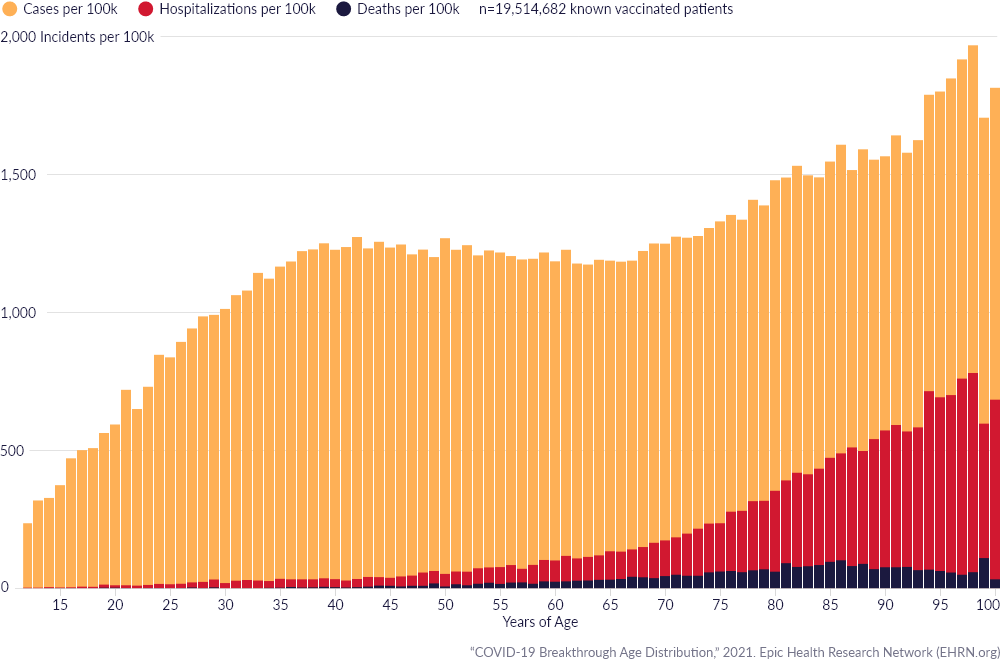
Several studies have found that a small percentage of fully vaccinated patients develop SARS-CoV-2 infections. In our study, we found that of patients who received the COVID-19 vaccine, fewer than 0.049% had a breakthrough positive PCR-based SARS-CoV-2 test and fewer than 0.018% had a breakthrough admission with a COVID-19 diagnosis more than 14 days after completing the vaccine series.

Communicable Infections from 2017-2021Expand
June 24, 2021

Silver Lining: Pandemic Precautions Reduced the Spread of Other Contagions

To investigate potential impacts of the COVID-19 pandemic on nine common communicable infections, we compared the number of confirmed cases from March 2020 to February 2021 to the same period of the past three years, starting with March 2017. We found that all nine diseases declined during the pandemic, and the general pattern of reduced communicable infections during the COVID-19 pandemic appears to be shared across multiple communicable infections.

New Heart Failure After Hospital AdmissionExpand
June 23, 2021

New Analysis Suggests COVID-19 Infection Doesn’t Cause New Heart Failure

In our recent study, we found that 3,945 patients had new heart failure documented within 3 months after their COVID-19 admission. To determine whether this heart failure was new or pre-existing, we examined new documentation of heart failure for patients admitted with hip fracture or stroke to compare with our finding for COVID-19. We selected hip fracture as a comparison because there is no expected clinical, causal relationship between hip fracture and heart failure, and we selected stroke because it shares a similar risk profile as severe COVID-19.

Lung Cancer Screening Rates for Eligible Patients with Coverage Through Medicaid or MedicareExpand
June 17, 2021

Despite Insurance Coverage, At-Risk People Not Getting Life-Saving Lung Cancer Screenings

The U.S. Preventive Services Task Force (USPSTF) recommends that patients eligible for lung cancer screening receive a low-dose CT scan to screen for lung cancer each year. Our study includes 381,849 patients eligible for lung cancer screening per USPSTF guidelines who have insurance coverage for a CT lung cancer screening through Medicaid or Medicare. We found 87.1% of eligible patients were not screened, despite having insurance coverage. We did not see large variability between Medicaid and Medicare screening rates as shown in Figure 1.

Breast Cancer Screening RatesExpand
June 9, 2021

Cancer Screenings Are Still Lagging

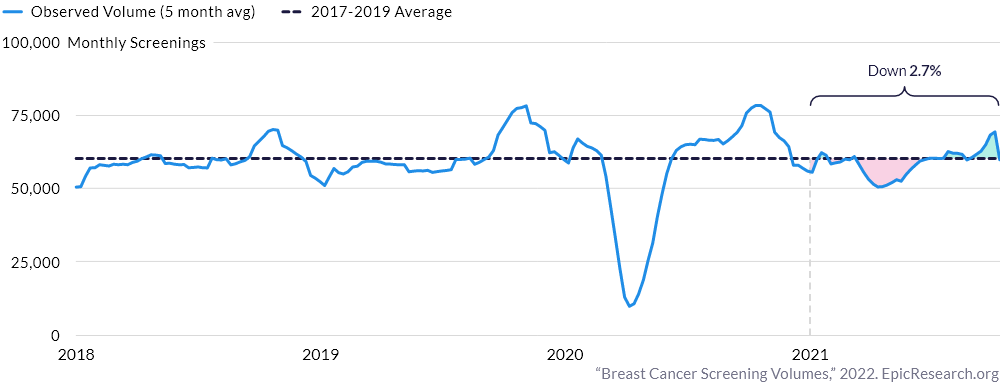
In May 2020, we reported a significant drop in the weekly rate of routine cancer screenings. At that time, there was a 94% decrease in breast cancer screenings, an 86% decrease in colon cancer screenings, and a 94% decrease in cervical cancer screenings. In July 2020, our follow-up study showed weekly screening rates for these three cancers were on the rise but had not yet reached pre-pandemic levels, remaining 29%-36% lower than their pre-COVID-19 levels.

New Type 1 Diabetes Patients per 100,000 Active Pediatric PatientsExpand
June 8, 2021

New Diagnoses of Pediatric Type 1 Diabetes Are Increasing in Severity

Recent studies indicate that the incidence of pediatric type 1 diabetes is increasing. However, there is little data on whether the severity of illness at initial diagnosis is increasing. One way to define severity at diagnosis is to review incidence of DKA (Diabetic Ketoacidosis). Patients diagnosed with DKA often present with very high blood sugars and require hospitalization.

RSV Cases Dropped by 97% During the PandemicExpand
June 7, 2021

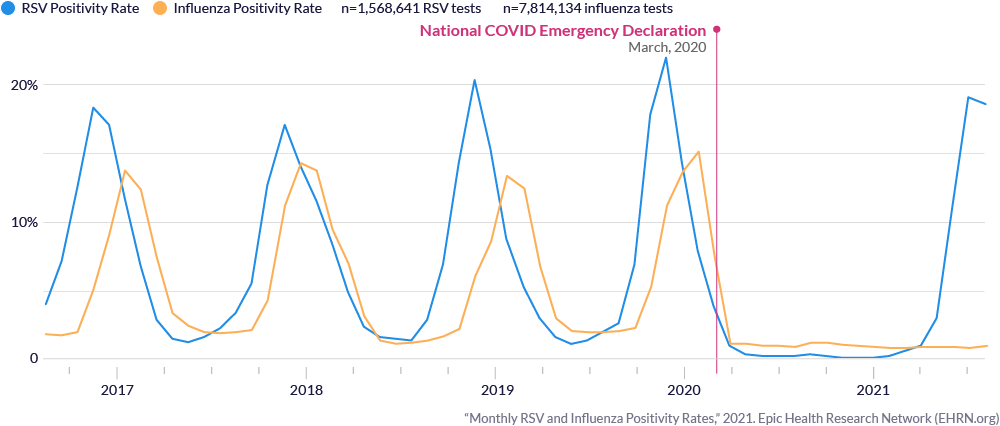
RSV Cases Dropped by 97% During the Pandemic

Respiratory Syncytial Virus (RSV) is a common cause of acute cough in kids and is the most common cause of pneumonia in infants. Similar to influenza, RSV can cause mild respiratory symptoms or can become severe and require hospitalization. We saw that influenza infections drastically dropped during October through March of the 2020-2021 respiratory season3 and wondered whether RSV infections did as well.

Outpatient Adolescent Mental Health Visit Volumes by SexExpand
June 3, 2021

Adolescent Mental Health Visits Increased for Females During the Pandemic

During the COVID-19 pandemic, mental health diagnoses made up a greater proportion of pediatric visits than before the pandemic. As shown in Figure 1, outpatient mental health visits for adolescent females increased by 11.3% over predicted volumes during the COVID-19 pandemic. Mental health visits for adolescent males decreased by 0.4% from predicted volumes during the same time period.

Inpatient Admission VolumesExpand
May 28, 2021

Hospital Utilization During the Pandemic: An Update

The COVID-19 pandemic has dramatically impacted utilization of healthcare services in the U.S. Previous studies of the early months of the pandemic reported substantial reductions in hospital inpatient admissions and outpatient visits, including ED visits, compared to pre-COVID levels. More recent studies, using updated data, have reported that trends began to normalize, with hospital utilization seen approaching pre-COVID levels.

COVID-19 in Pregnancy: Birth and Infant OutcomesExpand
May 26, 2021

Preterm Birth Less Common in COVID-Negative Patients

Previous studies have shown that pregnant women with COVID-19 are at greater risk of having a premature birth than those without COVID-19. We previously studied neonatal outcomes related to COVID-19. Now that more time has passed and more COVID-19 positive women have given birth, we re-examined neonatal outcomes of babies who were born during the pandemic.