Epic Research is not viewable using Internet Explorer. Please try accessing it with an alternate browser.
Displaying 221-240 of 312 Articles

All Articles

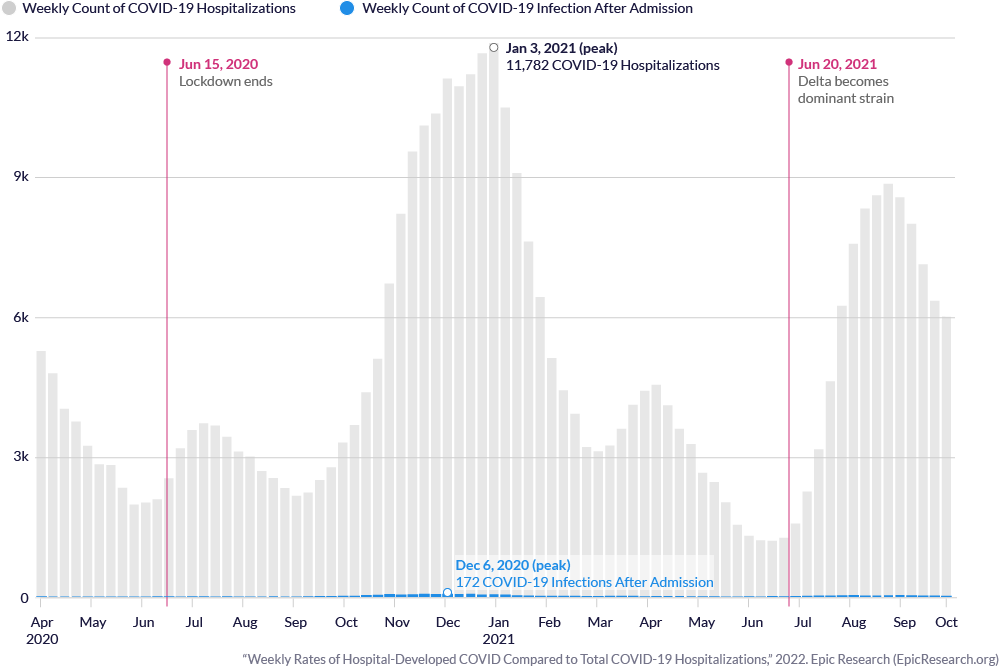
Weekly Rates of Hospital-Developed COVID Compared to Total COVID-19 HospitalizationsExpand
February 7, 2022

Fears of Catching COVID-19 in a Hospital Likely Unfounded

Throughout the pandemic, some people have been reluctant to go to the hospital or ED due to concerns about contracting COVID. We wanted to investigate the frequency with which patients developed COVID-19 while hospitalized. As a proxy for this, we looked at patients who tested negative on the day of or day after admission and then tested positive six or more days later.2 We chose this timeframe to try to exclude patients who might have been positive on admission but tested negative at that time due to a lower viral load.

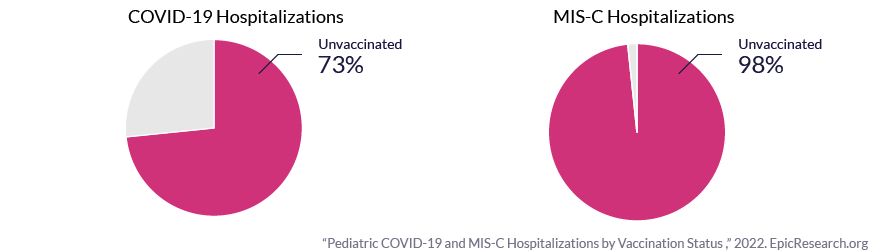
Pediatric COVID-19 and MIS-C Hospitalizations by Vaccination StatusExpand
January 28, 2022

98% of MIS-C Hospitalizations Were Unvaccinated Pediatric Patients

While pediatric hospitalization rates for COVID-19 remain much lower than adult hospitalization rates for the same conditions, less is known about the differences in hospitalization rates for COVID-vaccinated and unvaccinated pediatric patients. Additionally, we sought to understand whether COVID vaccination was associated with hospitalizations for multi-system inflammatory syndrome in children (MIS-C), a serious condition associated with COVID-19.

Risk of Myocarditis in Patients Ages 12-30Expand
January 25, 2022

Myocarditis Risk 17 Times Higher for Unvaccinated Patients Ages 12-30 Who Get COVID-19 Than COVID-Vaccinated Patients

Recent reports have indicated that adolescents and young adults, particularly males ages 12-29, who receive an mRNA COVID-19 vaccine have an increased risk of myocarditis, an inflammation of the heart muscle. In October 2021, the FDA delayed its decision on the authorization of the Moderna vaccine for adolescents due to these concerns. We previously studied the risk of myocarditis across 15 million patients of all ages and found that the incidence of myocarditis following the COVID-19 vaccine was not substantively different from the incidence in pre-pandemic years.

Breast Cancer Screening VolumesExpand
January 18, 2022

Troubling Cancer Screening Rates Still Seen Nearly Two Years Into the Pandemic

Routine cancer screenings are a primary preventative care measure that decreased dramatically at the start of the pandemic with 94% decreases in both breast cancer screenings and cervical cancer screenings and an 86% decrease in colon cancer screenings. While cancer screening rates rebounded in 2021 from early pandemic lows, they were still lower than expected.

Getting COVID-19 Twice: Reinfections 44% More Likely Among the UnvaccinatedExpand
December 13, 2021

Getting COVID-19 Twice: Reinfections 44% More Likely Among the Unvaccinated

To examine how vaccines affect immunity for people who have already had COVID-19, we compared reinfection rates of COVID-19 in vaccinated and unvaccinated patients and found that unvaccinated patients were significantly more likely to be reinfected. To best determine whether a patient was vaccinated or unvaccinated, our study population included those with a face-to-face encounter where vaccination status could be verified.

Percentage of COVID-19 Hospitalizations by Age GroupExpand
December 8, 2021

COVID-19 Hospitalizations Skew Younger Post-Vaccine and Post-Delta

We studied how vaccine availability and the emergence of variants of COVID-19 have affected different age groups of patients hospitalized with COVID-19. The data show that the distribution of COVID hospitalizations among different age groups has remained relatively stable since the start of the pandemic. However, there are two noteworthy trends:

Rates of C-Section More Than Double for Patients with BMI Over 40Expand
December 7, 2021

Rates of C-Section More Than Double for Patients with BMI Over 40

A pregnant patient’s body mass index (BMI) can affect the risk of complications for both the patient and the baby.1 We reviewed EHR data for more than 900,000 pregnancies that had pre-pregnancy BMI data to identify rates of certain delivery, prenatal, and postpartum complications.  Figure 1 shows rates of cesarean section, preterm delivery, and low birth weight. Rates of cesarean section increase steadily as maternal BMI increases, while rates of preterm delivery and low birth weight are more variable across different BMI groups. Compared to patients with a healthy BMI (18.5-24.9), patients with a BMI of 40 or greater have more than double (120%) the rate of cesarean section, a 45% increase in the rate of preterm delivery, and a 0.3% decrease in the rate of low birth weight.  Figure 2 shows rates […]

Urgent Care Shifts to Testing and Immunization During the PandemicExpand
December 7, 2021

Urgent Care Shifts to Testing and Immunization During the Pandemic

Many other healthcare settings have seen changes in the patient populations they see since the beginning of the COVID-19 pandemic. Prior to the pandemic, urgent care facilities were becoming popular alternatives to emergency departments for patients with urgent, but non-life-threatening, conditions. We wondered how the pandemic has impacted the volume and types of care sought in urgent care since many patients with respiratory symptoms may not need emergency care.

Pandemic or Not: Strep-testing Guidance Overlooked for the Majority of PrescriptionsExpand
November 30, 2021

Pandemic or Not: Strep-testing Guidance Overlooked for the Majority of Prescriptions

A commentary on this article was also published in NEJM Catalyst. Even for experienced clinicians, distinguishing between sore throats of viral and bacterial origin by observation alone is particularly challenging. Before most patients with a sore throat are prescribed antibiotics, the American Academy of Family Physicians recommends a positive diagnostic test for group A beta-hemolytic streptococci (GABHS). Empiric antibiotics, or antibiotics without a test, should be limited because they aren’t effective for viral infections and because unneeded antibiotics can cause side effects and antibiotic resistance.

RSV Rebounds Off-Season, but Influenza Is Still a No-ShowExpand
November 23, 2021

RSV Rebounds Off-Season, but Influenza Is Still a No-Show

In May and June 2021, we reported that RSV and seasonal influenza cases dropped during the COVID-19 pandemic.  Respiratory viruses other than COVID, like RSV and Influenza, were purported to increase again after measures like masking and social distancing were relaxed in the summer of 2021. EHR data for positive RSV and influenza tests show that the number of RSV cases has risen sharply since May 2021 while the number of influenza cases remains uncharacteristically low.

Breakthrough COVID-19 Cases on the Rise: Still Rare for Vaccinated PeopleExpand
November 22, 2021

Breakthrough COVID-19 Cases on the Rise: Still Rare for Vaccinated People

On June 29, 2021, we reported that 0.049% of patients fully vaccinated for COVID-19 developed a breakthrough COVID infection. This data included 8,662,367 fully vaccinated patients, of which 4,260 had a breakthrough COVID case. Patients were considered “fully vaccinated” 14 days after completing a manufacturer-recommend COVID-19 vaccination series (i.e., 14 days after the second dose of Pfizer-BioNTech, the second dose of Moderna, or the first dose of J&J/Janssen). Breakthrough cases were defined as those with a positive PCR-based SARS-CoV-2 test result and/or a COVID-19 diagnosis at least 14 days following the final dose in the series. The initial data included patients who were fully vaccinated on or before May 9, 2021.

Shorter Hospital Stays Associated with Patient Portal UseExpand
November 17, 2021

Shorter Hospital Stays Associated with Patient Portal Use

Patients who are more engaged in their healthcare often have better outcomes. Because patient portal use is one marker of engagement, we wondered whether access to a patient portal correlated with hospital length of stay for certain conditions. To test this, we looked at two different types of admissions: admissions for new illness (COVID-19) and admissions for chronic illness (heart failure). Patients who were hospitalized for either COVID-19 or heart failure were more likely to have shorter hospital stays if they had an active patient portal account.

Rates of Occurrence by Age for Gestational Hypertension, Preterm Delivery, Low Birth Weight, and Postpartum HemorrhageExpand
November 2, 2021

Risk of Pregnancy Complications Also a Concern for Younger Patients

Starting at age 35, pregnancies are considered to be high risk due to advanced maternal age and can result in complications for both the patient and the baby. Adolescent patients also face risks in pregnancy. We reviewed 1.45 million live births for patients ages 13 to 45 between January 1, 2016, and June 1, 2021, and found that rates for some complications increase as patients get older while rates for other complications are higher for both younger and older patients.

Elective Surgery Volumes During COVID-19Expand
October 20, 2021

Elective Surgeries Approach Pre-Pandemic Volumes

In the early months of the pandemic, many hospitals stopped performing elective surgical procedures at the recommendation of the American College of Surgeons and the U.S. Surgeon General. We investigated whether common elective surgeries have returned to expected levels.

Percentage of Patients 65 Years and Older with Inappropriate Beers List Criteria PrescriptionsExpand
October 8, 2021

Seniors Should Avoid These Meds—1 in 5 Are Prescribed Them Anyway

Polypharmacy, often defined as the use of five or more medications, is prevalent in adults ages 65 and older, with 40% taking 5-9 medications and 18% taking 10 or more. While drug-drug interactions and side effects are possible in all age groups, they are more prevalent in patients over 65, especially for certain medications. The American Geriatric Society publishes the Beers Criteria for Potentially Inappropriate Medication Use in Older Adults, which lists medications that should not be prescribed for patients 65 and older in most circumstances due to likely adverse events, like confusion.

Remote Assessment Equivalent to In-Person Visit for Cognitive and Academic Testing in KidsExpand
October 1, 2021

Remote Assessment Equivalent to In-Person Visit for Cognitive and Academic Testing in Kids

There has been an increase in telehealth visits across multiple specialties since the start of the pandemic. Prior to the pandemic, children needing evaluation for cognitive delays were seen in person. During the pandemic, many children needed to complete testing via telehealth, also known as teletesting. Although studies show telehealth is increasing as a method for providing cognitive therapies, psychologists were concerned that administering cognitive and academic via teletesting may not be valid since those tests were designed for in-person evaluations.

2020 firearm injuries up more than 70%–worse in Black and Hispanic young menExpand
September 15, 2021

2020 Firearm Injuries Up More Than 70%–Worse in Black and Hispanic Young Men

According to both researchers and the media, reports of gun violence rose significantly in 2020. We reviewed EHR data for patients who sought care for at least one new firearm incident. The data show a sharp increase in incidents starting in late spring 2020, with monthly incidents peaking in October 2020 at 73% higher than the monthly average in 2018 and 2019.