Epic Research is not viewable using Internet Explorer. Please try accessing it with an alternate browser.
Displaying 281-300 of 312 Articles

All Articles

COVID-19 positive patients by ageExpand
September 8, 2020

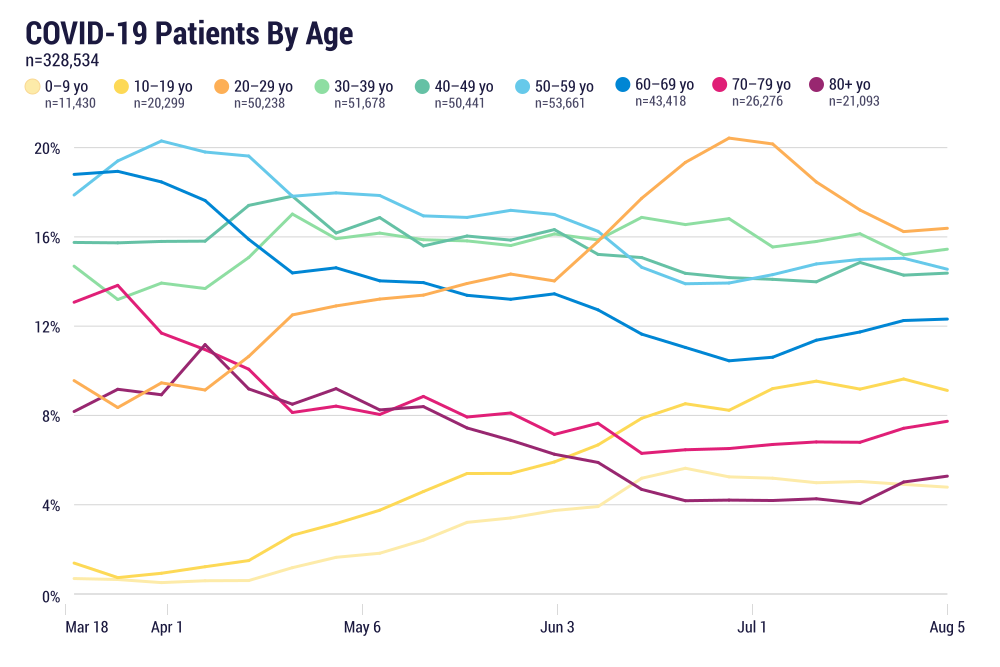
COVID-19 Prevalence Has Increased More in Younger Patients than Other Age Groups

Interest in the demographic characteristics of people with COVID-19 has been high since the start of the pandemic. Initially, when testing resources were scarce and often limited to the sickest patients, older adults represented a higher proportion of patients than young people. Beginning in June, demographics shifted and young people now represent the largest subgroup of COVID-19 cases…

IV dripExpand
September 2, 2020

COVID-19 Healthcare Coalition: Independent Investigations Show Famotidine Does Not Lower Risk of Death in COVID-19 Patients

The first collaborative study with the COVID-19 Healthcare Coalition looked at the impact of famotidine treatment on the risk of death in admitted COVID-19 positive patients. Each data partner performed an identical independent analysis on their own aggregated dataset. The final conclusion from each data source was the same: rapid famotidine treatment does not reduce the risk of death among admitted COVID-19 patients, even when adjusting for age, sex, and comorbidities…

Visit patterns for patients with anxiety and depression. Weekly volume by type of visit and type of patient, January 5-July 12, 2020.Expand
August 19, 2020

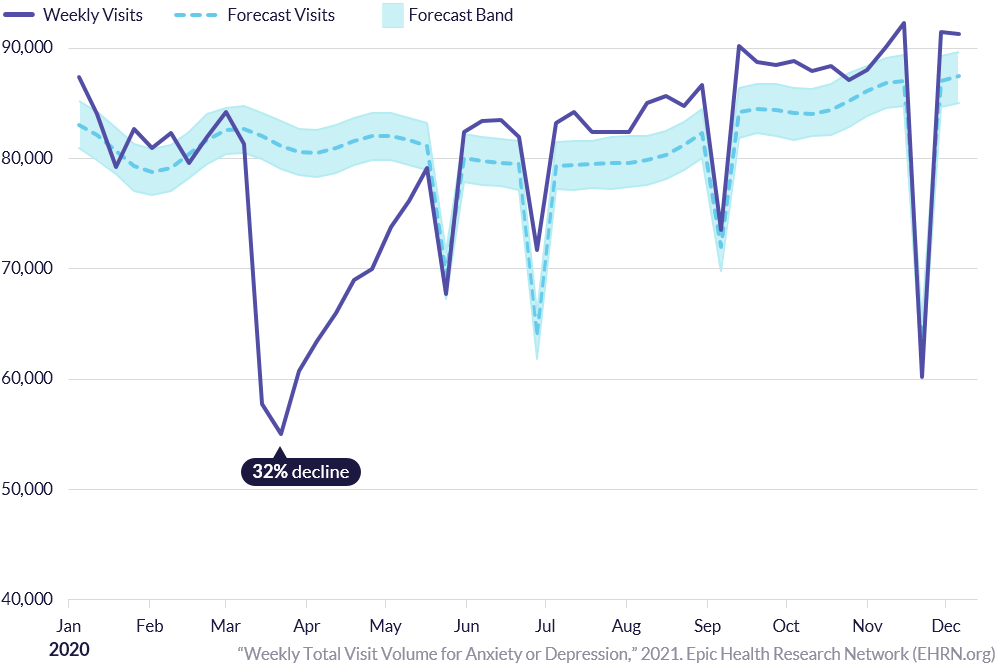
Effect of COVID-19 Pandemic on Visit Patterns for Anxiety and Depression

The CDC has raised concerns about increased isolation, fear, and anxiety during the pandemic. This brief examines how COVID-19 changed care delivery patterns for patients with anxiety or depression, in both established and newly diagnosed patients. Additionally, our analysis shows the initial steep drop-off in total visits has returned to pre-pandemic levels, with telehealth compensating for the reduction in office visits…

Ambulatory visits by type and US regionExpand
August 18, 2020

Telehealth: Fad or the Future

Earlier this year, we published data demonstrating a 300-fold increase in telehealth, broken down by encounter reason and specialty. Many speculated that telehealth volumes would remain high throughout (and perhaps beyond) the pandemic; however, recent EHR data show that volumes peaked in mid-April. Since then, levels have dropped to make up only 21% of total visits, though this is still much higher than the rates seen before the pandemic…

Non-Emergency Procedure Volumes in the Wake of COVID-19Expand
July 28, 2020

Non-Emergency Procedure Volumes in the Wake of COVID-19

Our analysis found a dramatic–but temporary–decrease in procedures for cardiac arrhythmia and coronary artery disease, as well as procedures for all of the major organ cancers we examined. At their lowest point, these procedure volumes were 49-88% below their historical weekly averages…

Figure 1. Weekly cancer screening volume vs. week number in year for each type of cancer screening. Colored capsules show the last observed volume.Expand
July 17, 2020

Delayed Cancer Screenings—A Second Look

The number of cancer screenings has recently begun to rise, but has not yet reached previously expected levels: June 16 weekly volumes remained 29%, 36%, and 35% lower than their pre-COVID-19 levels for breast, colon, and cervical cancer screenings. The gap between the expected screenings and the actual screenings created a sizable deficit of “missed” screenings…

Most intensive respiratory therapy by geographic regionExpand
July 16, 2020

Geographic Variation in Use of Oxygen Support

Using data from nearly 50,000 hospitalized COVID-19 positive patients across the United States, statistically significant geographic variations in supportive oxygen treatment were demonstrated and not explained by differences in age, sex, or severity…

Dr. Zachary McClain of The Children's Hospital of PhiladelphiaExpand
July 6, 2020

Silver Linings Pandemic

Life was so normal a few weeks ago. For me, and I imagine for many other health care workers, before the novel coronavirus etched its deadly path across the U.S., day broke to a remarkably similar routine. The alarm would go off at six-thirty; I would walk my dear-but-crazy mutt, Scrappy; swim a mile; grab a coffee; and then head into a clinic of waiting teenagers. I would greet my coworkers with hugs. And I would spend the day seeing the patients I love.

Figure 1. Percent of patients who developed AKI during a COVID-19 admission, broken down by age and sex. Note: Two patients with a documented sex of “Other” were excluded from analysis.Expand
July 1, 2020

Acute Kidney Injury in Admitted COVID-19 Patients

COVID-19 is primarily a respiratory infection; however, there are multiple examples of multi-organ and systemic dysfunction associated with this infection. In addition to lung damage, it appears that the virus affects the lining of blood vessels, potentially leading to clotting, embolization, and organ damage…

Patients on OUD Medications for the First Time AllExpand
June 29, 2020

Fewer Patients Started on Medications for Opioid Use Disorder During COVID-19

The number of patients receiving first-time prescriptions for Medications for Opioid Use Disorder (MOUD) decreased by over 30% in the spring of 2020 when compared to trends observed in EHR data from January 2017 to May 2020. This finding suggests that patients at risk for opioid use disorder (OUD) and overdose are increasingly vulnerable during the COVID-19 pandemic. This risk is further demonstrated by reports from the American Medical Association of increases in opioid-related mortality reported in more than 30 states1 over this time period. Since January 2017, the number of patients receiving buprenorphine, methadone, or naltrexone for the first time […]

Ventilator survival by age and sexExpand
June 26, 2020

Mortality of COVID-19 Admitted Patients on Mechanical Ventilators

This brief was updated on June 26, 2020, with data as of June 18, 2020. Overall findings remain consistent, but the percentage of patients with an unknown outcome has decreased from 34% to 6%. Here we examine the mortality of patients who received invasive mechanical ventilation as treatment for acute respiratory failure due to COVID-19…

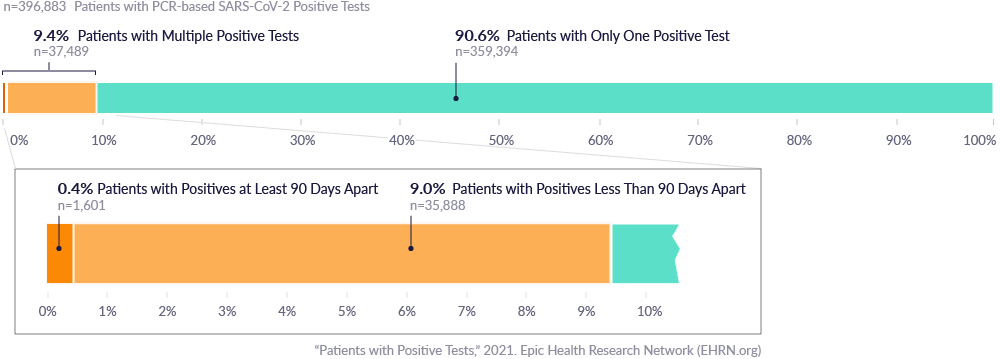
Figure 1. COVID-19 tested patients, by test result. Callout graph shows subsequent testing information for patients who tested positive for COVID-19.Expand
June 12, 2020

Patients with Multiple Positive COVID-19 Tests

For numerous reasons, some patients are tested for SARS-CoV-2 virus multiple times, and a small percentage of patients test positive more than once. We were interested in better understanding how often patients undergo multiple tests, and what the time frame is between the first and last positive results. We speculate that fewer days between repeat positive results likely represents a true positive for live virus. A longer day separation seems to better support the concept of PCR tests detecting non-active viral RNA, as suggested in a recent article from the Korea Centers for Disease Control and Prevention (KCDC).1 Our sample included […]

Telehealth by condition - v2Expand
June 12, 2020

As Office Visits Fall, Telehealth Takes Hold

Recent data show that, while overall visit volumes have decreased dramatically since the beginning of the COVID-19 pandemic in the United States, telehealth visits overall have increased 300-fold.1 This brief describes the diagnoses and specialties that saw the largest visit volumes of telehealth, with the goal of informing future strategy around telehealth…

Disproportionate percentage of African American, Hispanic, and Pacific Islander patients currently have COVID-19 in OCHIN NetworkExpand
June 9, 2020

OCHIN: Health Care Trends and Transformation During COVID-19

Story contributed by OCHIN. Recent EHR data show that while the rate of COVID-19 infection appears to be slowing in some parts of the country, the number of patients testing positive for the virus continues to grow. Across the OCHIN network of providers, which treats a total of 5 million complex and underserved patients nationally, 87 OCHIN Epic organizations are actively testing patients for COVID-19.

Estimated missed or delayed immunizations during COVID-19 pandemic by patient age groupExpand
May 19, 2020

Pediatric Immunizations Drop in the Wake of COVID-19

Recent EHR data show that immunization administrations for pediatric patients have decreased by 42% in the spring of 2020 compared to prior years. It is estimated that 260,000 immunizations expected for March 8-May 9 were missed or delayed across all age groups at sampled organizations. Patients under 6 months of age showed the smallest reduction in immunization volume, but these patients still missed or delayed an estimated 29,000 immunizations this spring.  This trend has also been observed for immunizations that provide protection against very contagious and sometimes deadly diseases, such as measles. Only 44% of the nearly 2,600 MMR immunizations that […]